PART 1
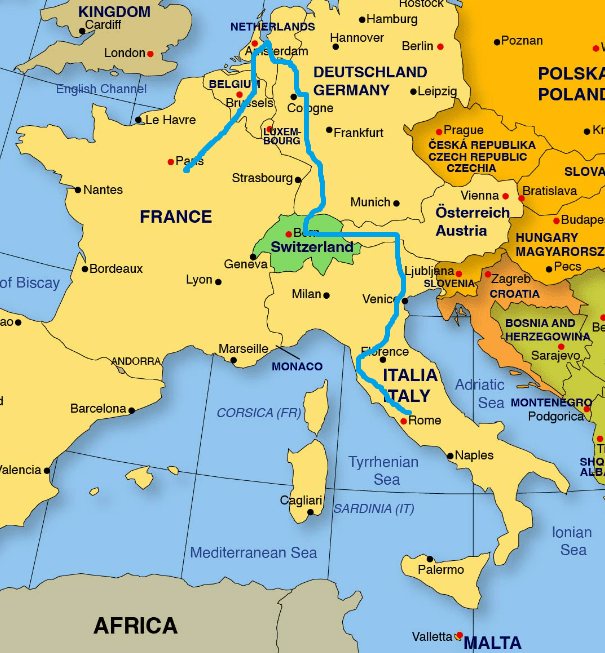
The second fortnight of May when the Sun is at its hottest best, we decided to channelize some hard-earned money for a family Europe tour. We opted for the 12 nights and 13 days tour starting Italy and ending in Paris through Austria, Switzerland, Germany, Netherlands, and Belgium.
The tour has a hectic pace, a first to us. It does not gel with the idea of sitting at the fireplace sipping hot chocolate or the finest wine looking at the Alpine mountains with your feet up on a chair. The tour managers will pull you out of the bed; drag you by the hair to the breakfast; watch silently and coldly at the watch and then you at the table till you get up in fright; strictly time the visiting points; push you for an early dinner; throw you in the bed for an early sleep; and then give a morning call at a sadistically early hour. The pace is phenomenal and one cannot really blame the tour managers- sometimes screaming, sometimes glaring, sometimes gentle, sometimes cold, and sometimes friendly- in the insistence on time management. Managing 38 Indian adults, each one with his/her own aura of importance and an own sense of time is an unenviable job.
We started in Rome, first visiting the Vatican City, followed by the Leaning Tower of Pisa. The bus tour took us over the next 12 days or so across Western Europe. The towns, sights, and countries flowed past: Italy, Austria, Switzerland, Germany, Netherlands, Brussels, and finally France.
Day 1: Vatican City, Rome, and the Leaning Tower of Pisa
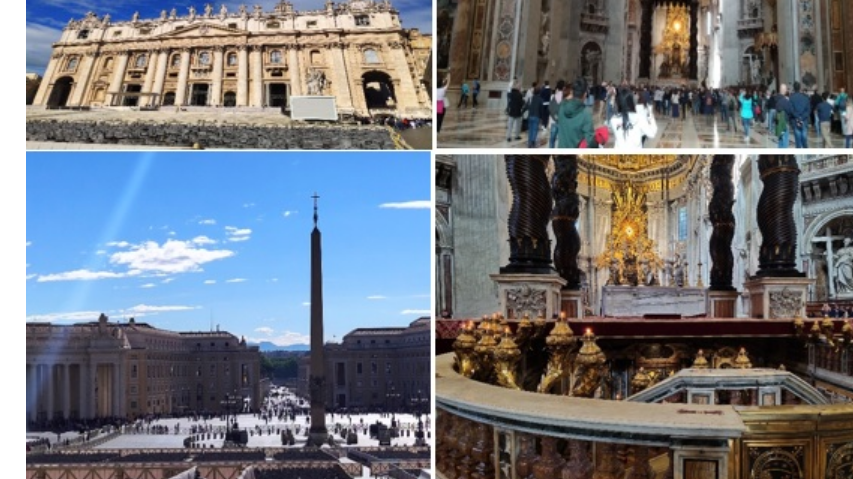
Vatican City is an independent city-state within Rome, Italy. With an area of 110 acres, and a population of about 1,000, it is the smallest sovereign state in the world by both area and population. The Pope, who is the bishop of Rome and head of the Roman Catholic Church, rules the Vatican City. The independent Vatican City-state came into existence on 11 February 1929 by the Lateran Treaty between the Holy See and Italy.
Within the Vatican City are religious and cultural sites such as St. Peter’s Basilica, the Sistine Chapel, and the Vatican Museums. Sale of postage stamps and souvenirs, fees for admission to museums, and sales of publications supports financially the unique economy of Vatican City. We could see only St. Peter’s Basilica.
St. Peter’s Basilica is the most renowned work of Renaissance architecture and the largest church in the world. While it is neither the mother church of the Catholics nor the cathedral of the Diocese of Rome, St. Peter’s is one of the holiest Catholic shrines. Catholic tradition holds that the basilica is the burial site of Saint Peter, chief among Jesus’s apostles and the first Bishop of Rome.
St. Peter’s is famous as a place of pilgrimage. The Pope presides at several liturgies throughout the year, drawing audiences of 15,000 to over 80,000 people, either within the basilica or the adjoining St. Peter’s Square. As a work of architecture, it was arguably the greatest building of its age. Inside the church, most tourists draw a gasp as an OMG (Oh My God– for the primitives) moment. It is an experience beyond compare.
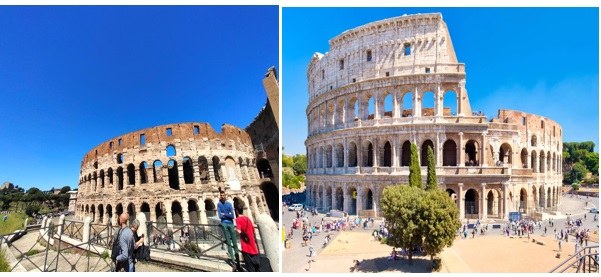
We drove through the roads of a very busy Rome and saw only one place, the Colosseum, before proceeding to Florence to see the tower of Pisa.
We drove through the roads of a very busy Rome and saw only one place, the Colosseum, before proceeding to Florence to see the tower of Pisa.
The Colosseum is an oval amphitheatre in the centre of the city of Rome. It is the largest amphitheatre ever built, a project of the Flavian dynasty, from AD 72 to AD 80. The Colosseum could hold between 50,000 and 80,000 spectators. Gladiatorial contests, dramas, and public spectacles happened there. The Church also put this place as a place for many martyrs who sacrificed their lives in the hands of ‘Roman brutes’. However, this is one of the most enduring pagan symbols standing amid a civilizational destruction.
The Colosseum is a must visit place, though the time given by the tour guide was infinitesimally small. There were huge crowds and queues waiting outside to go in. It is one of Rome’s most popular tourist attractions, one of the tops in the world too. On Good Friday the Pope leads a torchlit “Way of the Cross” procession that starts in the area around the Colosseum
The Leaning Tower of Pisa
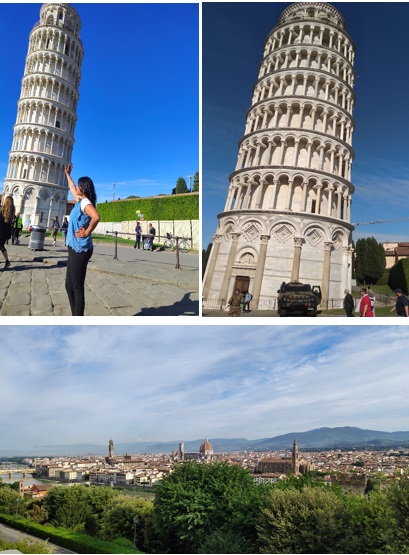
The Leaning Tower of Pisa is a bell tower of the cathedral of the Italian city of Pisa, known worldwide for its nearly four-degree lean, the result of an unstable foundation. The tower is situated behind the Pisa Cathedral. The tower’s tilt began during construction in the 12th century, due to soft ground on one side, which was unable to properly support the structure’s weight. The tilt increased in the decades before the got structure completed in the 14th century. It gradually stabilized. Later, engineering efforts in the 20th and 21st centuries have made it completely stable, but with an intact tilt. The tilt brings the tourists.
Students will remember the famous experiments of Galileo dropping cannonballs of different masses from the top of the tower to demonstrate that the speed of descent was independent of the mass. However, this story may be apocryphal
All the tourists separated in groups of two, and the whole area filled with tourists with their palms up in the air. Initially, I thought it was a ritual in the cathedral area, but later realised that it was to photograph a person trying to stop the tower from falling! The craze of the modern digital photography.
Day 2: Venice
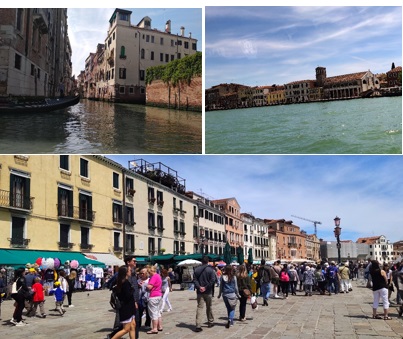
Venice is the most romantic place in the world. Paris- I am sorry. For most Indians, Amitabh Bachchan and Zeenat Aman in a Gondola singing an RD Burman number in ‘The Great Gambler’ was the first encounter with Venice. In recent times, one of the best depictions of Venice is in the Angelina Jolie and Johnny Depp starrer, ‘The Tourist.’ It is a must see for anyone, especially so if one is visiting Venice.
Venice is the capital of the Veneto region, and is situated on a group of 118 small islands that separate by canals and link by over 400 bridges. Venice has been known “Queen of the Adriatic”, “City of Water”, “City of Bridges”, “The Floating City”, and “City of Canals”. The lagoon and a part of the city are a UNESCO World Heritage Site. The city is facing some major challenges including financial difficulties, pollution, an excessive number of tourists and problems caused by cruise ships sailing close to the buildings, Venice remains a very popular tourist destination, and ranks as the most beautiful city in the world.
In late 2016, it had a major deficit in its budget and debts of more than €400 million. A National Geographic article pointed out in its subtitle: “Residents are abandoning the city, which is in danger of becoming an overpriced theme park”. The city hosts up to 60,000 tourists per day. ‘Overtourism’ is also a problem as UNESCO now talks about ‘sustainable tourism.’
No wonder nobody smiles at the tourists in Venice or for that matter in Italy too.
Day 3: Swarovski Crystal Museum
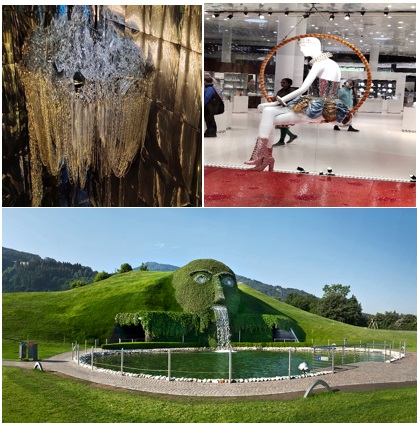
The most obvious attraction of Austria is perhaps the Swarovski Crystal Museum, an awesome place guaranteed to blow you off. The time given of course is very short, but it is one of the places where one might easily resolve to come back another day. The tour-guide will try to convince that the landscape changes as one enters another country; but frankly, it is a difficult convincing. It is impossible to discern a new European country on road, except perhaps Switzerland.
The Museum is in Wattens, Austria; and constructed in 1995 in celebration of the 100th anniversary of the Austria based crystal company Swarovski. Multimedia artist Andre Heller designed the museum. The Chambers of Wonder show works of art in crystal by some of the greatest names in the world of architecture, art, and design. Collective gasps come as one enters each of the rooms with an individual thematic focus. There is a shop at the end of the tour where it is highly recommended to sort out the buying, especially gifts for people back home.
Day 4: Jungfraujoch Rail Journey
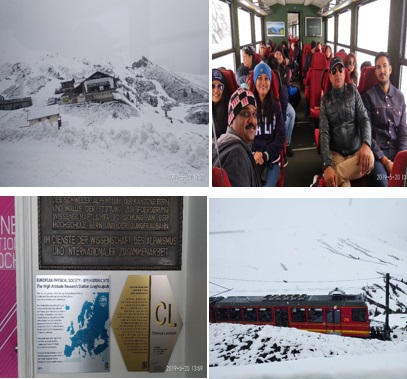
Jungfraujoch, in the Bernese Alps, is at an elevation of 3,466 metres (11,371 ft) above sea level. The Jungfraujoch is accessible to tourists by the Jungfrau line, running partly underground through a tunnel. The Jungfraujoch railway station is the highest in Europe and connects to the ‘Top of Europe’ building, which includes several panoramic restaurants. The Sphinx Observatory, reached by an elevator, is one of the highest astronomical observatories in the world, giving an additional viewing platform at a height of 3,572 metres (11,719 ft). The excursion to top of the Europe is a great highlight of the tour, albeit at an extra cost.
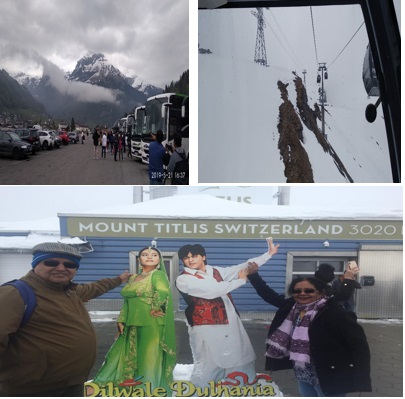
Day 5: Mount Titlis cable car ride
Titlis is a mountain of the Uri Alps, and at 10,623 feet above sea level, it is the highest summit of the range north of the Susten Pass. It is one of the most awesome sights to visit in Switzerland. I am not jealous, but seriously, for those who have not visited, our own cable-ride at Auli near Badrinadh is equally good, if not better. The world’s first rotating cable car takes a scenic and awesome ride from Engelberg on the north side. The cable car system connects Engelberg to the summit of Klein Titlis through three stages.
At Klein Titlis, there is an illuminated glacier cave from an entrance within the cable-car station. Be sure to take great pictures of the snow and the Titlis Cliff Walk, the highest elevation suspension bridge in Europe. Send them promptly to your people back home frying in the hot summer of India to burn them even more. And when you take selfies in front of a cut-out of Shah Rukh Khan and Kajol in DDLJ, one really feels tops for being an Indian.
Day 6: Black Forest, Cuckoo clocks, and a cruise on the river Rhine
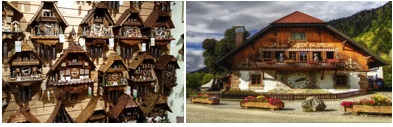
The Black Forest is a large forested mountain range in southwest Germany, roughly 160 kilometers long and 50 kilometers wide. This was where the cuckoo clocks, a cultural iconic symbol of Germany and an immensely popular souvenir, developed and later popularized. There are many places which highlight the production of these clocks, having museums, cafes, and shops. We drove through the nice forested area and went to a place in Titisee.
A cuckoo clock is a typically pendulum-regulated clock that strikes the hours with a sound like a common cuckoo’s call and has an automated cuckoo bird that moves with each note. The mechanism to produce the cuckoo call has been in use since the middle of the 18th century and has remained almost without variation till today.
The Rhine is one of the major European rivers, which has its sources in Switzerland and flows in a mostly northerly direction through Germany and the Netherlands, emptying into the North Sea. We took a beautiful river cruise on the Rhine and breath-taking view of old castles and scenery indeed etched into our memories.
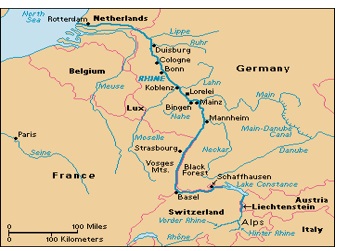
The river begins in the southeastern Swiss Alps, flows through six countries before flowing into the North Sea at Rotterdam. The Rhine is one of the longest and most important rivers in Europe, running for over 1,232 km. Many cities and towns flourish on the banks of the Rhine like Cologne, Düsseldorf (Germany), Rotterdam (Netherlands), Strasbourg (France) and Basel (Switzerland). Some grossly polluting it too! The largest city on the Rhine is Cologne, Germany.
Like some of our rivers, the Rhine was one of the most polluted rivers in Europe. After a Chemical spill in 1986, Rhine Action Programme (RAP) aimed to improve the quality of the river water and protect the endangered species like salmon. The Rhine and the Danube formed most of the northern inland frontier of the Roman Empire and, since those days, the Rhine has been a vital and navigable waterway carrying trade and goods deep inland. Many castles and fortifications built along the river is a reminder of the Holy Roman Empire.
Day 7: Amsterdam and a river cruise
Amsterdam is the capital city and most populous municipality of the Netherlands. However, it is not the seat of the government, which is The Hague. Amsterdam’s name derives from Amstelredamme, indicative of the city’s origin around a dam in the river Amstel. Originating as a small fishing village in the late 12th century, Amsterdam became one of the most important ports in the world during the Dutch Golden Age (17th century), due to trade and finance related developments.
The 17th-century canals of Amsterdam and the 19–20th century Defence Line of Amsterdam are on the UNESCO World Heritage List. As the commercial capital of the Netherlands and one of the top financial centres in Europe, Amsterdam is an alpha- world city. Philips and ING have their world headquarters in Amsterdam. Famous Amsterdam residents include the diarist Anne Frank; artists Rembrandt van Rijn and Vincent van Gogh; and philosopher Baruch Spinoza.
Amsterdam’s main attractions include its historic canals, museums like the Van Gogh Museum, the Royal Palace of Amsterdam, and many more. Amsterdam is also very well-known for the red-light district and cannabis coffee shops.
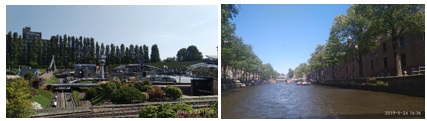
We undertook a most amazing cruise on the famous Amsterdam canal system. The beautiful plan developed in the 17th century, and was based on four concentric half-circles of canals. Three of the canals were mostly for residential development. The fourth and outermost canal is a collective name for all canals in the outer ring. The canals served for defence, water management and transport.
This was after a briefest tour of the city center. Amsterdam itself can take about 5 to 6 days for a complete exploration.
Day 8: Brussels (Belgium)
Brussels grew from a small rural settlement on the river Senne to become an important city-region in Europe. Since the end of the Second World War, it has been a major centre for international politics and the home of numerous international organisations, politicians, diplomats, and civil servants. Brussels is the de facto capital of the European Union. The headquarters of NATO are also located in Brussels. As the economic capital of Belgium and one of the top financial centres of Western Europe, it also classifies as an Alpha global city.
In Brussels, we walked hurriedly through the rains for half an hour to see a child statue in the central city in the act of urination. People from all countries flocked around the statue busily taking photographs and selfies. Manneken Pis is a bronze sculpture in the centre of Brussels depicting a naked little boy urinating into a fountain’s basin. Manneken Pis is the best-known symbol of Brussels. Most Indians gasped at the sight of the statue and the desperate people taking selfies. We see live people in the same act at millions of places here and nobody photographs! However, we need to take some lessons in toilet cleanliness from the western world. The sense of discipline and the maintenance of toilets at most places, especially the tourist ones, is exemplary.
The Brussels-Capital Region is officially bilingual in French and Dutch. The main attractions of Brussels include its historic Grand Place, Manneken Pis, and the Museums of Art and History. Because of its long tradition of Belgian comics, Brussels is also a ‘capital of the comic strip’. Belgian cartoonist Georges Remi, who wrote under the pen name Herge gave us the wonderful Tintin comics. The all-time favourite Asterix comics in French also first appeared in the Franco-Belgian comics magazine Pilote in 1959. Huge posters of Tintin and Captain Haddock adorned a few walls in Brussels gladdening my juvenile heart.
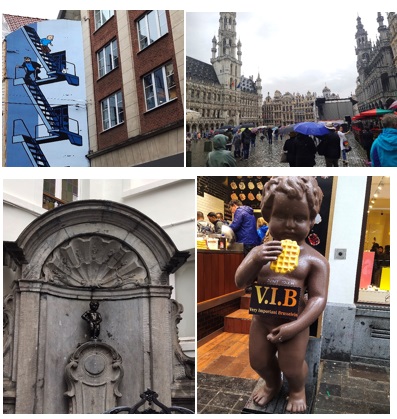
Day 9: Paris and river cruise and Eiffel Tower by night
Paris is the capital and most populous city of France spread on both sides of river Seine. Paris has been one of Europe’s major centres of finance, diplomacy, commerce, science, and the arts. Fashion of course is synonymous with Paris. Paris is among the top expensive cities in the world along with Singapore, Zurich, Oslo, Geneva, and Hong Kong.
Paris is famous for its art museums and architectural landmarks; the Louvre is the most visited art museum in the world. Other landmarks, to name just a few include Cathedral of Notre Dame de Paris, the Eiffel Tower, and the Arc de Triomphe. The historical district along the Seine in the city centre classifies as a UNESCO Heritage Site. Paris is the third most visited travel destination in the world after Bangkok and London. A night and a day will not cover even a single percentage of the glory of Paris. Paris would require a week by itself, obviously for another, another day.
And of course, necessary for all tour companies without which they would hang, is the Eiffel Tower, the most visited monument in the world. Most tour companies provide the Eiffel visit up to the second floor. This showcase of Paris gets almost 7 million visitors a year. The Eiffel Tower is a wrought-iron lattice tower named after the engineer Gustave Eiffel, whose company designed and built the tower. The latest ‘Men in Black’ depicted him as an alien communicator through the Eiffel Tower!
Constructed as the entrance to the 1889 World’s Fair, it came under severe criticism by some of France’s leading artists and intellectuals for its design, but it has become a global cultural icon of France and one of the most recognisable structures in the world. The tower is about the same height as an 81-storey building, and is the tallest structure in Paris. During its construction, it become the tallest human-made structure in the world, a title it held for 41 years until the construction of the Chrysler Building in New York City.
A petition called “Artists against the Eiffel Tower” sent to the Minister of Works and Commissioner for the Exposition in 1887 read:
We, writers, painters, sculptors, architects, and passionate devotees of the hitherto untouched beauty of Paris, protest with all our strength, with all our indignation in the name of slighted French taste, against the erection … of this useless and monstrous Eiffel Tower … To bring our arguments home, imagine for a moment a giddy, ridiculous tower dominating Paris like a gigantic black smokestack, crushing under its barbaric bulk Notre Dame, the Tour Saint-Jacques, the Louvre, the Dome of les Invalides, the Arc de Triomphe, all of our humiliated monuments will disappear in this ghastly dream. And for twenty years … we shall see stretching like a blot of ink the hateful shadow of the hateful column of bolted sheet metal.
Gustave Eiffel responded to these criticisms by comparing his tower to the Egyptian pyramids: ‘My tower will be the tallest edifice ever erected by man. Will it not also be grandiose in its way? Why would something admirable in Egypt become hideous and ridiculous in Paris?’ If he saw the tourists today, he would laugh the hardest.
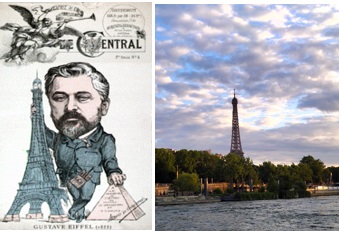
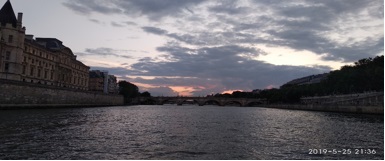
The Société d’Exploitation de la Tour Eiffel (SETE) now considers any photo showing the illumination of the tower to be a separate work of art that falls under copyright. This has been rather controversial as it seems a great way of making money. Capturing the lit tower in night- illegal? Must be joking in this digital age.
The controversies ring common with the Statue of Unity of Sardar Patel In Gujarat, the tallest statue in the world. Maybe, a day in the future when it becomes the sight to visit- like the Eiffel!
Day 10: Eiffel tower visit till the second floor, city tour, and metro ride
Paris is very steep for shopping, and it is advisable to sort your shopping needs at other places. Unless budgeting is a silly idea for you. Paris impressed me with the metro system. The metro was not a part of the itinerary. A friend took us on a great metro ride. I realised the importance of an effective mass transport system in the formation of cities. The metro system, a symbol of the city, is known for its density within the city limits, uniform architecture, and unique entrances. It is mostly underground and 214 kilometres long. It has 16 lines and 302 stations, of which 62 have transfers between lines. It carries 4-5 million passengers a day, which amounts to 20% of the overall traffic in Paris. It would be a great idea to include metro ride for the tourists by the tour operators. There is a lot to learn.
Paris in one and half days is the biggest joke of all times, but for a budgeting traveller wishing to taste entire Europe, this is the best we can do. One would require a full week in the minimum to explore Paris.
To gladden our hearts, our friend took us to a ‘100% vegetarian’ restaurant in the heart of Paris. The biggest surprise was when I found it completely occupied by white people. There would always be an Indian restaurant tucked somewhere in all European cities, but many times run by Sri Lankan Tamils (as in Paris) or Bangladeshis. Apparently, it makes more business sense to name a restaurant ‘Indian’ than anything else!
And the next day, we flew back to India via Dubai, successfully ending a whirlwind visit of another world.
Thoughts After a Whirlwind Travel
The European cities, if you travel rapidly from one city to another just blur into a uniform image. The cities are similar looking and a blindfolded person transported from one city center to another would not be able to tell the difference. The schedule becomes a great blur too as one rolls from one place to another and travels constantly on the road. The roads are fantastic, which are a source of great envy to Indians. There is absolutely no strain, even if one is on the last seat. Try a long distance on the backseat of a bus on Indian highways. It is a guarantee to sprain every muscle in the body. We have the talent, we have the science, but Indian roads remain pathetic due to nothing else but sheer corruption. Roads are the biggest source of income for our politicians, contractors, and governmental bodies and hence they stay crumbled. The quality of living is very good; the roads, water, food, air. However, most Indians would perhaps opt for the quality of life back home; friends, relatives, people, interactions, the organised chaos all around- beautiful things we take for granted, the importance of which we realize after a visit or stay in a Western country. I always say, give us good roads, sanitation, cleanliness, and water; and of course, a decolonization in the narratives of caste and religion- and nothing in the world beats India.
PART 2
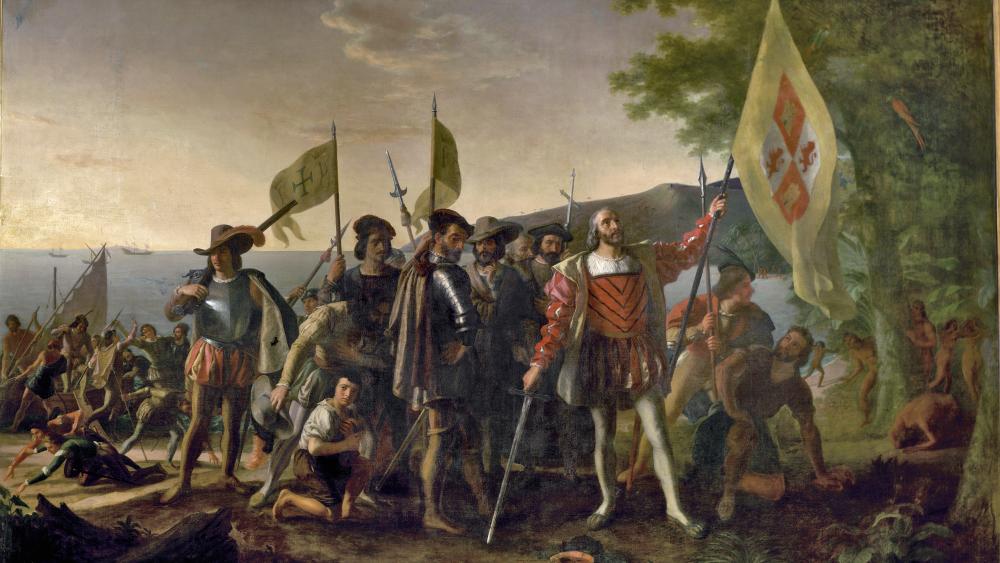
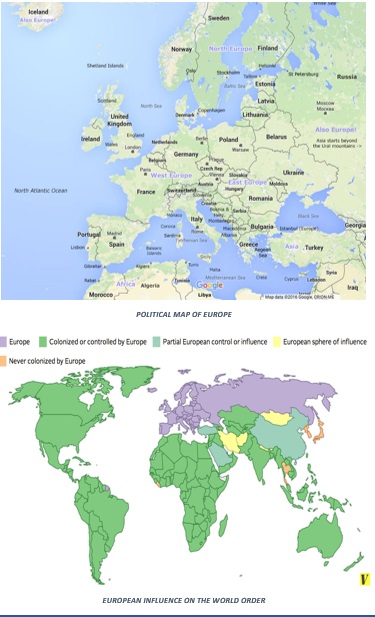
European colonialism lasted from the 16th to 20th centuries vastly extending their reach around the globe by establishing colonies in the Americas, Africa, and Asia. Colonialism was of two types mainly: settler colonialism, when towns and cities were established with primarily European residents and the amenities of a “Neo-Europe”; and exploitation colonialism, purely extractive and exploitative colonies, functioning to exploit resources and transfer them to the colonizer, with the minimum amount of investment possible. The aftermath of World War II dismantled European empires and started decolonization.
Settler colonialism often resulted in the forced migration of indigenous peoples. This happened in the United States, New Zealand, South Africa, Canada, Argentina, and Australia. When Europeans settled in these desirable territories, natives gave way to the colonialists; and it mostly a violent story.
The Sad African Story
The Berlin Conference of 1884 systemized European colonization in Africa and is the genesis of the ‘Scramble for Africa.’ The Conference implemented the ‘Principle of Effective Occupation in Africa’ which allowed European states with even the most tenuous connection to an African region to claim dominion over its land, resources, and people. In effect, it allowed for the arbitrary construction of sovereign borders in a territory never previously existed.
The economic exploitation of Africa by the colonial powers was extreme. The colonial system produced a complete monopoly on political power and left the working class small and incapable of collective action. Combined with deep-seated racism, native workers had to deal with impossible circumstances. European quality of life and cost of living were only possible because of the exploitation of the colonies.
Colonialism distorted the personal and ethnic identities of natives because it operates under the assumption of perceived superiority. It disrupted civil societies across the world, especially Africa. Ethnic manipulation manifested itself beyond the personal and internal spheres. The genocides due to the frictions between the Hutu and Tutsi tribes in Rwanda is a direct outcome of the colonial rules of Germany and Belgium. As an example of its brutality, British officers ordered, sanctioned, paid for, and conducted the use of smallpox against the Native Americans during the siege of Fort Pitt.
Some European Countries With Colonial Histories
Denmark-Norway
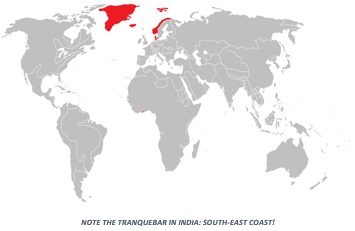
At the beginning of the thirteenth century, Denmark obtained possessions in Estonia. In personal union with Norway, Denmark-Norway in the seventeenth century developed colonies, forts, and trading posts in Africa, the Caribbean, and India. The first colony in India was at Tranquebar on India’s southern coast in 1620.
Netherlands
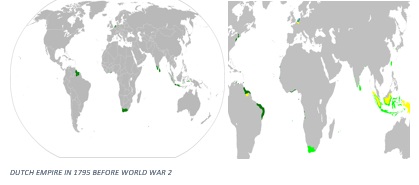
The Dutch were one of the biggest colonials with huge presence across the world. They were constantly fighting the Portuguese and the British, and lost finally many of their territories due to wars or treaties.
The Dutch first landed in Ceylon in 1602, and it was then under Portuguese control. Between 1636 and 1658, they managed to oust the Portuguese. Ceylon remained a major Dutch trading post. In 1796 the British seized control of the Dutch positions, at the urging of the ruler of Kandy. In 1605, Portuguese trading posts in Indonesia fell to the superior firepower of the Dutch. In 1619 a fortified base Batavia (now Jakarta) became the headquarters of the Dutch East Indies Company.
The Dutch maintained bases in Taiwan, Malaysia, and Japan too. The part of Australia now known as Western Australia was known as New Holland. The Dutch held territory in central and southern Iran from 1623-1766. The Dutch would lose influence to the Portuguese and British. They also held colonies in Pakistan, Ghana, South Africa, present day USA, West Indies, Suriname, Guyana, Brazil, Virgin Islands, Tobago amazingly.
Belgium
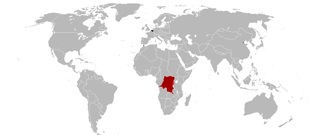
Belgium controlled two colonies during its history, the Belgian Congo from 1908 to 1960, and Ruanda-Urundi from 1922 to 1962. It also had a concession in China, and was a co-administrator of the Tangier International Zone in Morocco. Roughly 98% of Belgium’s overseas territory was just one colony (about 76 times larger than Belgium itself) — known as the Belgian Congo. The brutal colonial story of Congo is another story by itself.
England and France
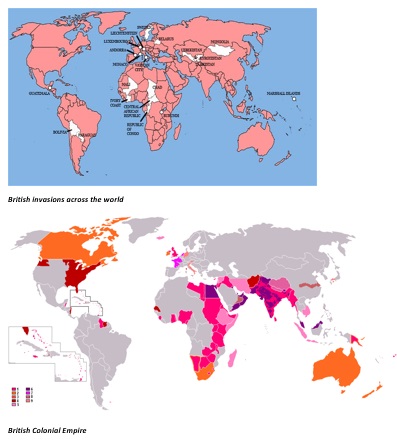
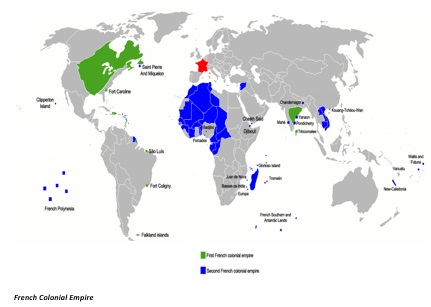
The British have invaded almost 90 per cent of the countries around the globe during different times! Only 22 of the almost 200 countries in the world never experienced an invasion by the British. During the Colonial period in Africa, the British and the French colonized more than 95% of the continent. The British colonized twenty-two African states while the French colonized twenty. France retained control of North, and West and parts of Central Africa while the British took control of East and South Africa. The scramble and partition of Africa led other countries to express their interest including the Germans, Portuguese, Italians, and the Dutch. The entry of European powers into Africa led to the spread of European culture, particularly the languages, in the continent. Today, most of Africa use either French or English as the second language
Spain
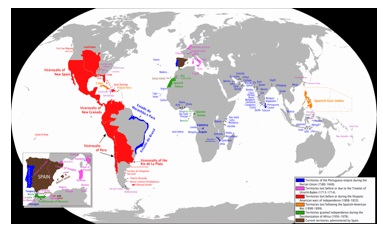
Its conquests of the Americas and Africa were bad enough with long standing consequences. However, thankfully, they did not look at India else we would have had areas in India speaking Spanish and people rooting for joining Spain just as there are some Goan people rooting for Portugal.
However, the Iberian Union, a dynastic union of the Kingdom of Portugal and the Spanish Crown between 1580 and 1640, brought the entire Iberian Peninsula, as well as Spanish and Portuguese overseas possessions, under the Spanish Habsburg kings Philip II, Philip III and Philip IV. So indirectly, through the Portuguese, Spain also had presence in Goa and other parts of India. The Portuguese Restoration War established the House of Braganza as Portugal’s new ruling dynasty ending the Spanish union.
Portugal
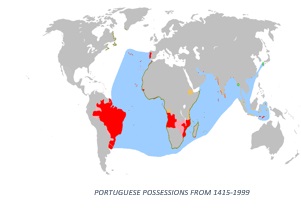
Brazil was by far Portugal’s largest colony by area and population. Due to the Treaty of Tordesillas, signed with Spain in 1494, Portugal claimed Brazil. The Portuguese imported African slaves and forced them to grow sugar, tobacco, cotton, coffee, and other cash crops. Brazil gained independence from Portugal in 1822. Portugal had of course a major presence in Goa, along with other South-East Asian countries.
Many of the European occupations and wars against each other occurred in the waters of Indian Ocean. Sanjiv Sanyal elegantly describes them in his book, ‘The Ocean of Churn.’
Italy
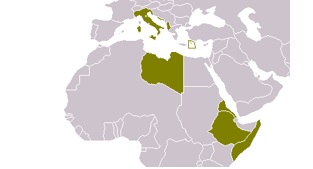
Italy was one of the European countries with colonies in Africa during the modern period. Lasting from 1890 to 1941, Italian colonialism in Africa included Libya, Ethiopia, Eritrea, and Somalia. Italian colonialism in Africa ended with the death of the Italian leader Benito Mussolini, the collapse of the Fascist regime, and the defeat of Italy in World War II.
Switzerland- The Paradox
Switzerland defies understanding. It stands alone, one of the richest countries in the world. It stayed away from the world wars; protected its banks and industries from hostile forces all around; manages an overwhelming amount of money in its banks; stayed away from the United Nations till very late; stays away from EU emphatically; has its own currency (Euros are accepted, but the change is in Swiss Francs); and every person flocks to it, some for tourism and some for putting their money with no questions asked. It just does not want to share its money.
How did they rise to such heights, a country poorly endowed with natural resources and in former times known as one of the ‘sick men’ in Europe? A popular public discourse, for explaining the success story is to highlight the Swiss working ethic, education level, and entrepreneurship. There is a complex network of reasons, of course.
The Swiss did not colonise Africa or any other country like the rest of their neighbours, but they did have connections through mercenaries, businesspeople involving in slave trade, and a widespread network of missionaries. The Swiss avoided direct confrontation with the English and resorted to the production of high-quality goods. But Swiss did turn English colonial expansion to their own advantage without obligation to bear any share of the costs involved.
Switzerland maintained a state of armed neutrality during the World Wars despite sharing borders with opposing players, through a combination of military deterrence, economic concessions to Germany and good fortune. Its banks served both sides well too! Despite the public and political attitudes in Switzerland, some higher-ranking officers within the Swiss Army had pro-Nazi sympathies, something which might have been a factor in Germany not attacking Switzerland. During World War II, the economy profited from the increased export and delivery of weapons to Germany, France, the United Kingdom, and other European countries. Switzerland’s production facilities were largely undamaged by the war, and afterwards both imports and exports grew rapidly.
Swiss expansion was also due the absence of a patent law until 1907, which facilitated the emergence of powerful food processing, chemical, and engineering industries in the late nineteenth century, as Swiss entrepreneurs could adopt new technologies without having to bear any of the high development costs.
Swiss neutrality, political stability, and national sovereignty are perhaps the most crucial factors which fostered a stable environment for the banking sector to develop and thrive. Currently an estimated 28 percent of all funds held outside the country of origin (“offshore” funds) are in Swiss banks. In 2009 Swiss banks managed 5.4 trillion Swiss Francs. On the flipside, Swiss banks have served as safe havens for the wealth of dictators, despots, mobsters, arms dealers, corrupt officials, and tax cheats.
Banks and insurance companies in most other European countries were constantly fighting the consequences of war and hyperinflation in the first few decades of the century. Switzerland managed to remain absent from both world wars, kept the exchange rate constant and guaranteed that the Swiss franc remained freely convertible throughout the whole period. Furthermore, the Swiss bankers – invigorated by a banking secrecy secured by the Swiss law in 1934 – became known as trustworthy administrators who do not ask too many questions. All these factors made the Swiss franc one of the most attractive currencies.
Colonial India
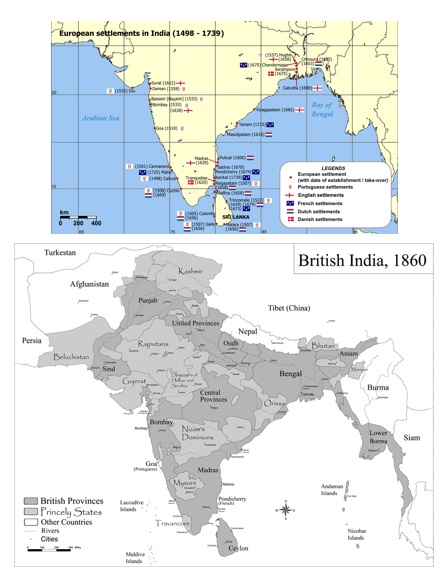
Before the Suez Canal, trade between India and the Far Eastern countries involved a trip around Africa. The Europeans rediscovered this route and their naval power slowly led to brutal domination starting in the 15th century. Trading rivalries amongst the seafaring Europeans brought other European powers to India. The Dutch (1605–1825), the Danes (1620–1869), the French (1668–1954), the Portuguese (1505–1961), the British (1612–1947) had their colonial presence in India and their internal wars and treaties in Europe had their effect in India too. Interestingly, Pope Alexander VI on 25 September 1493 gave the Spanish too territorial rights to India by the bull Dudum siquidem before the Treaty of Tordesillas removed these rights less than a year later.
It is surprising to see the colonial history of the Europeans with scarce trade resources; and equipped only with guile and military resources, thought fit to go to any land, occupy it forcefully, and play regional politics. They had good support from the Church and the Universities which justified their excursions. India surrendered to the British finally. Unfortunately, most of Europeans coming without any passports or visas, played havoc with the culture, heritage, economics, and every other sphere of the local life. As a writer Prodosh Aich puts it bluntly, they had nothing to trade. They came only with the purpose of loot, plunder, and a gross exploitation using guile, cunning, and a few decades of advanced weapon technology.
This is, in fact, one of the arguments against trying to get in touch with aliens. An alien civilization with thousands of years advanced technology would simply destroy us than being nice friends. This is an extrapolation of the typical human behaviour exemplified by the European colonial powers with a few years of advanced military technology when dealing with the rest of the world!
The Exploitation
In 1750, India and China were contributing 75% of the world GDP. In 1600, Britain was producing 1.8% of the world GDP, when the East India Company was set up. When Britain left India in 1947 after 200 years of rule, Britain was contributing 10% 0f the world GDP and India reduced to a pathetic 1.8%. The British left behind a society with 16% literacy, a life expectancy of 27 years, and over 90% living below the poverty line. Electricity was supplied first in the 1890’s. Till 1947 in a span of 50 years, all of Britain, US, and Europe was electrified; but the Raj connected merely 1500 of India’s 640,000 villages to the electricity grid.
India was an ‘extractive colony’. India’s Kohinoor diamond mined in Guntur found its way to UK largely by deceit and it is yet to come back. India’s rich maritime trade and highly developed banking system came to a grinding halt under the brutal colonial rule. In 1750, Indians had a standard of living like those in Britain, but the income plummeted to a tenth of the British in 1947. British Raj systematically subverted each of the state machinery tools, like armies, censuses, bureaucracies, railroads, hospitals, telegrams, and scientific institutions to its profit by plunder and manipulation.
In the entire 107 years from 1793 to 1900, an estimated 5 million people died the world over in all the wars combined. But, in just 10 years 1891-1900, 19 million people died in India due to famines alone. The famines were the biggest colonial holocausts; and are right at the top of some of the most brutal inhumanities in modern times. The regular famines of Bengal were the result of careless planning, Malthusian ideas, and highly racist leaders sitting in England looking the other way. Churchill hated the Indians and thought that they bred like animals. While the people in Bengal were dying due to famine, there was export of rice from the area to feed the soldiers fighting the World War in Europe. These are just a few examples of the colonial devastation in India. Of course, there are always a breed of apologists.
Finally, they distorted our cultural and ethnic narratives in a manner which we have completely internalised. They did not understand our traditions and created religions such as Hinduism, Sikhism, Buddhism, Jainism, Shaivism, and so on looking through their prisms of religion consisting of a single god, single Church, and a single book. The discourse on caste also became equally messy as they superimposed their own problems on our social structures.
SN Balagangadhara and his co-authors elegantly deal with how Western narratives of caste and religion severely undermined our cultural identities, almost de-rooting us. His books, ‘Western Foundations of the Caste System’ and ‘The Heathen in his Blindness’ are a must read for our persistently colonized and deracinated minds. Their racial theories based on white superiority created the malignant Aryan-Dravidian theory. The British left with a bifurcated country, but the discourses they left behind continues to divide us in a thousand ways based on religion, language, region, and caste.
The French and the British- Enemies Fighting on Indian Soil
The Deccan wars between the French and the English happened with Indian soldiers on both sides. As the Mughal Empire disintegrated in the early 18th century, and then as the Maratha Empire became weakened after the third battle of Panipat, many relatively weak and unstable Indian states were increasingly open to manipulation by the Europeans.
In the later 18th century, Great Britain and France struggled for dominance, partly through proxy Indian rulers but also by direct military intervention. The defeat of the Indian ruler Tipu Sultan in 1799 marginalised the French influence. A rapid expansion of British power followed through the greater part of the Indian subcontinent in the early 19th century. By the middle of the century the British had already gained direct or indirect control over almost all of India.
The French were constantly in conflict with the Dutch and later mainly with the British in India. At the height of French power in the mid-18th century, the French occupied large areas of southern India and the area lying in today’s northern Andhra Pradesh and Odisha. Between 1744 and 1761, the British and the French repeatedly attacked and conquered each other’s forts and towns in southeastern India and in Bengal in the northeast.
The Portuguese
In 1661, Portugal was at war with Spain and needed assistance from England. This led to the marriage of Princess Catherine of Portugal to Charles II of England, who imposed a dowry that included the insular and less inhabited areas of southern Bombay while the Portuguese managed to retain all the mainland territory north of Bandra up to Thana and Bassein. This was the beginning of the English presence in India.
The Portuguese ruled Goa for a continuous period of almost four centuries, and very blatantly refused to let go of it even after Indian independence from Britain. An army attack finally, led by the Indian government finally made them flee. The exploitation of Goa is a story, which again most of the Indians are unaware of.
Other Players
The Dutch were less involved in India, as they had the Dutch East Indies (now Indonesia) as their prized possession. Denmark–Norway established trading outposts in Tranquebar, Tamil Nadu (1620), Serampore, West Bengal (1755), Calicut, Kerala (1752) and the Nicobar Islands (1750s). At one time, the main Danish and Swedish East Asia companies together imported more tea into Europe than the British. Their outposts lost economic and strategic importance, and Tranquebar, the last Dano-Norwegian outpost, went to the British in 1868.
The South Indians were fantastic naval warriors resisting the Europeans fiercely; and it was not always a cakewalk for them in the march of colonisation. Many times, the Colonials lost very badly. There was a great ruler of Kerala called Marthanda Verma (1705-1758) who resisted the Dutch and defeated them decisively. Some claim that if Marthanda Verma had not defeated the Dutch, we would have been using the Dutch language instead of English in the country today.
The World Wars
The First World War
On 28 June 1914, a Bosnian Serb Yugoslav nationalist, assassinated the Austro-Hungarian heir Archduke Franz Ferdinand. This snowballed first into a war between Austria-Hungary on one side and Serbia on the other; and later after a complex networking of alliances involving most of Europe into one of the deadliest wars-the World War 1. The war involved 32 countries. This lasted from 1914 to 1918. Europe divided into two coalitions: The Triple Entente (Allied Powers)—consisting of France, Russia, and Britain—and the Triple Alliance of Germany, Austria-Hungary, and Italy (Central Powers). The war lasted till 11 November 1918. The mobilisation of 70 million military personnel, including 60 million Europeans, made it one of the largest wars in history. An estimated nine million combatants and seven million civilians died as a direct result of the war.
The war drew upon each power’s colonial empire as well, spreading the conflict to Africa and across the globe. In 1914, the Indian Army was one of the two largest volunteer armies in the world; it had a total strength of 240,000 men. By November 1918, the Indian Army contained 548,311 men- the Imperial Strategic Reserve. It was regularly called upon to deal with incursions and raids on the North West Frontier and to provide garrison forces for the British Empire in Egypt, Singapore, and China. The Indian Army also fought in the European, Mediterranean and the Middle East theatres of war in World War I.
Over one million Indian troops served overseas, of whom 62,000 died and another 67,000 wounded. In total at least 74,187 Indian soldiers died during the war, a war without any personal stake or honour, except for the reason that we were a colony of the British. 588,717 Indians went to Mesopotamia, 116,159 to Egypt, 131,496 to France, 47,000 to East Africa, 4000 to Gallipoli, 5000 to Salonica, 20,000 to Aden and around 30,000 to the Persian Gulf to fight in World War 1 for the British.
The Second World War
World War II was the deadliest conflict in human history, marked by 50 to 85 million fatalities, most of whom were civilians in the Soviet Union and China. This war involved almost 50 countries across the globe. It included massacres, the genocide of the Holocaust, strategic bombing, premeditated death from starvation and disease, and the only use of nuclear weapons in war.
World War II began on 1 September 1939, with the invasion of Poland by Germany and subsequent declarations of war on Germany by France and the United Kingdom. It was a fight between the Axis powers (Germany, Italy, Japan, Hungary, Romania, Bulgaria) and the Allied powers (U.S., Britain, France, USSR, Australia, Belgium, Brazil, Canada, China, Denmark, Greece, Netherlands, New Zealand, Norway, Poland, South Africa, Yugoslavia).
2,065,554 Indian soldiers fought the Second World War, and over 87,000 Indian soldiers (including those from modern day Pakistan, Nepal, and Bangladesh) died in World War II. Indians fought with distinction throughout the world, including in the European theatre against Germany; in North Africa against Germany and Italy; in the South Asian region defending India against the Japanese and fighting the Japanese in Burma. Indians also aided in liberating British colonies such as Singapore and Hong Kong after the Japanese surrender in August 1945.
Field-Marshal Sir Claude Auchinleck, Commander-in-Chief of the Indian Army from 1942 said that the British “couldn’t have come through both wars if they hadn’t had the Indian Army.” Basically, India fought and lost its sons in a war essentially based on the internal greed, ambitions, and angers of European powers against each other.
The Impact of Europe on India and the World
Europe has an intimate relation with India which most of us are quite unaware. The colonial expansion of Europe and the two world wars deeply impacted India. The story of colonial Europe is a that of plunder and an upsetting of the world order repeatedly in many forms across centuries. The things going for them were a few advanced decades of armed naval power backed by a strong sense of religious, intellectual, and racial superiority. The havoc created by Europe to Asia, America, Africa, and other South-East Asian countries have been all but obliterated from their history books. Shamefully, the epicentre of both the world wars was also Europe. Our Independence movement has deep connections to the world wars even as we needlessly lost thousands of soldiers fighting for the British.
Even as physically the colonial powers stripped us, intellectually their discourses led to a near permanent damage of our social and cultural spheres. European understanding of both religion and caste is having an impact even today as the colonial consciousness hangs heavily on our distorted academic and public discourses. Most of the ideas of caste and religion are wrong even as the division of the country continues daily, much after the creation of Pakistan.
Yet, most of us are ignorant, looking with wide eyes and awestruck brains at the beauty of Europe. The glitter and glory of Europe rests on a very disturbing ground, and we should never forget this. The Europeans have a reason to obliterate their colonial history as a default position. They used it once to instill national pride. They use other mechanisms now to do the same. But we hate ourselves using the stories they told us about ourselves. It is perhaps a time to forgive, but forgetting, never.
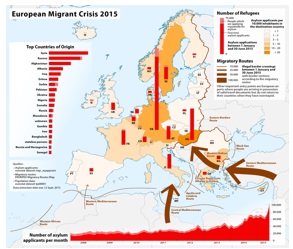
The migrant crisis in Europe, Schengen issues involving the 26 countries, problems of Brexit, falling economy to the point of collapse of many European countries, terrorist issues, problems with Russia, decreasing birth rate and growing old age populations are some of severe problems facing Europe today. The migrations across the Mediterranean is of major worry to many European countries, especially Germany. It is all very sad and one can sympathise with them. Today, it is the privilege and right of every country and its people to have peace, prosperity, and happiness; and every white, black, brown, or yellow person shares the burden to achieve this. In a globally connected world, a stable Europe is important for the whole world. But it may be just that Karma is paying a little visit.
Conclusions
It was heartening to see so many Indians, no longer staying in their shells, swamping the European countries, and filling their tourism coffers. One almost feels that their tourism is surviving only on the Indians and the Chinese! The prosperity of Indians was gratifying to see.
Having travelled to quite a few places in India too, the overwhelming thought which came to me at the end of the tour was that we need to develop our tourism to the full, which has far more to offer than any place in the world; and this is not chauvinism. Kashmir to Kerala; Gujarat to Nagaland, each state has something great to offer. If only we could improve the quality of our roads, our sanitation and toilet facilities, and ease of going around; India would undoubtedly be the world leader in tourism. From the Himalayas, to the deserts; from the splendours of the North-East to the beaches of Goa; from the greenery of Kerala to the temples of Madhya Pradesh; nothing beats India. In my limited excursions around the world, I am yet to see a structure which gave me a bigger OMG moment than the Tanjore Big Temple or the Kedarnath trek in the Himalayas. India is the best country in the world for tourism, and I would believe that it is the most important ministry in dire need of developing.
The best part of the journey were the lovely Indians from all parts of the country: Assam, Rajasthan, UP, Maharashtra, Karnataka, Tamil Nadu, Telangana, Gujarat-much of India had its representation. It was a huge educational tour for my family as we were more impressed with the variety of Indian culture, languages, and the tremendous affection we received from everyone than the sights and sounds perhaps! People are more important for the memories than the places.
FIRST PUBLISHED IN INDIAFACTS
Europe: European History – A Briefest Overview- II
 RANDOM MUSINGS