As a Paediatric Surgeon, diabetes remains a distant field, and such patients stay far off the radar of my clinic. However, they say an old patient is better than a new doctor when dealing with a disease. I have had diabetes for 20 years and am currently 59 years old (late-ish middle age according to me, definitionally old according to my more forthright daughter). Thus, I can gently claim that I am suitably qualified to speak on both diabetes and its conjoined twin, lipid abnormalities. One could be spared of diabetes’ best friend, called hypertension, but lipid abnormalities, almost never.
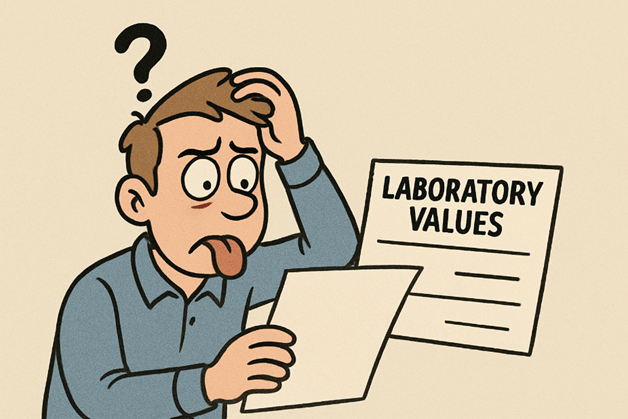
I manage my diabetes reasonably well, but I personally detest the lipid reports. There are all kinds of sundry values and ratios one has to contend with, and it is a sure bet that these would never be “normal”, lying within the safe ranges that ensure a good sleep. Like a group of mad alcoholic monkeys on a hot tin roof, one, many, or most of them are sure to play rogue and jump randomly. The statins are always a part of the symphony of medicines for any diabetic, I would say.
However, over two decades, I have generally come to accept the drugs and diabetes with a stoic calm. I find it gently amusing when a new diabetic becomes overwhelmed by frequent testing and gets flustered by minor changes in their blood sugar values. Of course, I have to be strict about the sweets and the fruits and the oils and the fats and the carbohydrates and the sugars and the ice creams and the junk foods and the pizzas and the puris… However, some friends and relatives do test me.
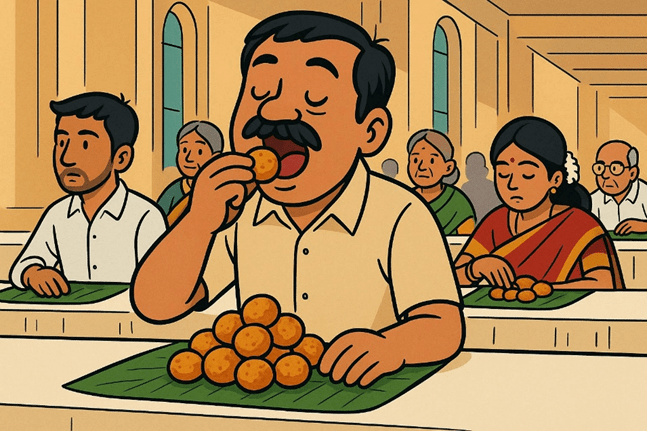
There is this divine sweet in the Telugu lands called “Boori”. It is a soft, fluffy, spherical piece of heaven with a crisp outer shell, and it is certainly a favourite dish in Telugu marriages. Now, the traditional way of eating is to poke a gentle hole at the center of the sweet and pour some ghee and then consume it. It is the closest thing to absolute, unadulterated happiness. A relative of mine pours not a spoon but plenty of large spoons with the ghee overflowing onto the table. He then gulps the sweets down the throat one after another. And when he sits next to me consuming those sugar and cholesterol bombs with aplomb, I can only burn.
Now this dear cousin would send in a health report with the smallest change of values. For myself, achieving these values would require incredible discipline, almost as if I needed to stitch my lips together, cover my tongue with a thick plastic sheath, and run five miles twice a day. “What should I do?” he asks. I am tempted to advise him to either stand on the terrace in the summer for twenty four hours without footwear or swim for ten miles in a river infested with crocodiles. But being the good, kind doctor, I grin and bear it and reply calmly that he is the healthiest man and would live for a hundred years.
Of course, with a few rare exceptions (I am not one of them), the number and types of pills tend to increase over the years, despite the best efforts. However, setting aside the medications, it is ironic that a person with diabetes may actually be leading a healthier lifestyle! I try to maintain a disciplined lifestyle with a moderate diet, yoga, pranayama, meditation, and regular walking that has formed an inseparable part of my life. They do work, and this is for those rational and scientific beasts who look at all such ideas, like yoga, as unscientific and belonging to the zone of mumbo-jumbo.
It took one cardiologist called Dean Ornish to show how yoga, pranayama, and meditation, coupled with a well-balanced diet, help not only stabilise the big three culprits of cardiac disease—diabetes, hypertension, and abnormal lipids but cause a reversal of heart disease. In contrast, other interventions like aspirin or statins only halt the progression of disease without reversing it. Of course, Dean Ornish had to use terms like “cardiac coherence breathing”, “alternate nostril breathing”, or “deep relaxation” to obtain funding for his studies. His book Reversal of Heart Disease does make some compelling arguments.
Well-intentioned researchers want to correlate these ancient Indian practices perfected by the sages by offering theories of calcium channels, vasodilatory effects and so on to explain the benefits. Such explanations are probably not required when these practices certainly show tremendous help experientially for millions of people. But the sceptics stay, and we have to live with them despite wanting to break their skulls open and make them understand how the traditional sciences differ paradigmatically from the modern sciences.
On the flipside, my life became more organised and disciplined once I was hit with diabetes. The pre-diabetic life was extremely chaotic in terms of lifestyle, and today, I would advise any young person, when all is well, to enter into the routine of a decent diet and some form of exercise to stay off medicines for a long time. However, similar to a married person advising a bachelor against marriage or a Non-Resident Indian dissuading a dreamy Indian from going abroad, such counsel is frequently overlooked until one gains wisdom through experience. The ways of the world.
I do have some reservations against “complete” health checks done by some individuals on a regular basis and the labs marketing them aggressively. The cliché is true: the more tests one undergoes, the more likely one is to be classified as diseased. Our body being a soup of many elements from the periodic table, the chances of one of the molecules and compounds getting rogue are high with repeated and persisted testing. This scenario is especially true when normal ranges are revised randomly and individuals can be classified as abnormally “high” or “low”, leading to medications and a ticket to sleeplessness. Complete health check-ups occasionally lead up to some tricky situations too. During my morning walks, I often come across many reports from co-walkers for comment.
Once, an old and dignified gentleman watched me closely as I perused his numerous reports. OK, the complete blood picture, the sugars, the HbA1c, the lipids, the vitamin D levels, the vitamin B12 levels, the urine report, the prostate-specific antigen, the liver function tests, the renal functions, the ECG, the chest X-ray, the USG abdomen, and I abruptly stopped when I saw a semen analysis report. I stood still, a bit shocked. What kind of a lab does semen analysis for old people in their complete health check battery? The old man pointed to the sperm count, which showed a zero count, and asked if the result was a problem. I told him that it is normal for old people and jokingly said it is difficult for him to become a father. The relief on the face was palpable. This old, distinguished-looking gentleman certainly had been naughty.
There is a difference between ‘being fit’ and ‘being healthy’. Being overweight, underweight, short, tall, or a diabetic can sometimes be beyond our control. It is also entirely possible to be very fit while still having significant blockages in the blood supply to the heart; there have been numerous instances of athletes collapsing unexpectedly. Certainly, sedentary lifestyles, excessive screen time, poor eating habits, and easy access to junk food are obstacles to optimum health. Additionally, the immense pressure to adhere to societal beauty standards—whether that be being “thin and fair” or “muscular”—has a detrimental effect on both physical and mental health. True beauty is not defined by body shape or skin tone, but rather by health. And anyone can pursue health effectively.
Anyway, this is a diabetic doctor advising those who can hear to take care of their health when all is well and the going is good. We are living in increasingly sedentary times, with exercise meaning playing games on smartphones or on laptops. The stresses have also increased. Spend a part of the day, however little it may be, on yourself in the open, on the yoga mat, or in a gym; sleep and wake up early; laugh loudly in the company of friends; avoid cigarettes; keep a balanced, moderate diet with occasional indulgences; meditate if possible, and look at a wonderfully blessed, healthy life.
 RANDOM MUSINGS