The work was initially published as a three-part series in Indica Today Online Magazine. The links are provided at the end.
PART 1
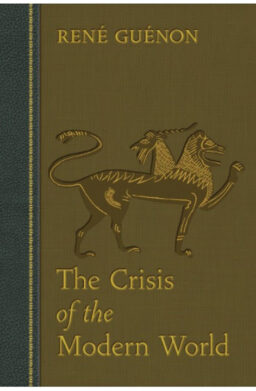
(This is a three-part summary of a captivating book by the French philosopher René Guénon. It critiques modernity through the lens of tradition, maintaining as much relevance today as it did when first published in 1923. Aside from the introduction, the remainder of the article belongs solely to René Guénon. This piece serves as a stepping stone for readers to visit Guénon’s extensive writings, which cover a wide range of topics, including Hindu philosophy. He emerged as a staunch defender of Eastern traditions in a world increasingly affected by the repercussions of Western modernity.)
Introduction: René Guénon (1886-1951)
Metaphysics is the study of the absolute first principles and the highest truths. It examines the single Reality and the Unity from which the multiplicity of the world emerges. In contrast, science begins and remains within the realm of multiplicity. Philosophy seeks to comprehend these first principles by exploring the diverse manifestations of the world, but modern Western philosophy often becomes ensnared in the external world and rarely arrives at the ultimate truth.
In Hindu traditions, the highest metaphysical principle is known as “Brahman”. Attaining knowledge of this principle, referred to as “moksha”, is regarded as the ultimate goal for both individuals and society, as expressed by our sages and seers. Knowledge can be acquired through three means: instinct (as observed in animals), reason (characteristic of humans), and intuition (exhibited by yogis and rishis). It is the last form of knowledge that leads to an understanding of the highest principles and constitutes the essence of metaphysics. This intuitive access to knowledge is central to Vedanta and is a recurring theme among thinkers belonging to the school called “Perennial philosophy” such as Ananda Coomaraswamy, Frithjof Schuon, and René Guénon.
We should exercise caution when using the term “intuition”, as it may be misinterpreted as a form of “sixth sense” in which reason plays no role. A more appropriate term for intuition would be “higher reason”, as the truths it infers arise from the reasoning faculty itself when it is pure and unencumbered by internal dispositions. The purified intellect and these dispositions are referred to as “shuddha-buddhi” and “vasanas” respectively in Indian texts or shastras. The subjects addressed by higher reason extend beyond the sensory realm; thus, its inferential reasoning does not merely connect two observable phenomena, such as fire and smoke. Rather, it signifies a vyapti (inference) that associates two entities, one or both of which may be non-perceptible. However, this topic exceeds the scope of the present article.
Guénon, although relatively obscure, is a significant figure in metaphysics. Born a French Catholic, he later converted to Islam and settled in Egypt, where he eventually passed away. The essential unity perceived by perennial philosophers among various world religions—such as Islam (particularly Sufism), Christianity, Buddhism, and Hinduism—can be challenging to grasp. Frithjof Schuon posits that an absolute unity exists at an esoteric level that surpasses human reason.
Guénon wrote extensively on a wide range of topics, including Vedanta and Hindu doctrines. His seminal work, The Crisis of the Modern World, offers an analysis of the modern world through the lens of tradition. Written in 1923, this book is remarkably prescient about the potential and catastrophic dangers associated with modernity. At the time of its writing, the First World War had concluded, while the even more devastating Second World War had yet to take place. The smartphones were far from being conceived. Nevertheless, Guénon accurately describes the trajectory of modern science. He identifies the most significant perils of modernity as individualism and nationalism, which ultimately contribute to disruption across the globe and will increase in the days to come.
This book is essential reading for anyone intrigued by the marvels of modernity, science, and the complex philosophy that often raises more questions than it answers. The three-part series serves as a summary and paraphrase of the book itself, designed solely for those interested in exploring René Guénon’s universe more deeply. In a world marked by significant disruption and disunity, we must critically examine the effectiveness of concepts like individualism, nationalism, democracy, the power of numbers, scientific progress, and even philosophy. These ideas may ultimately lead to the eventual collapse of society unless we return to the fundamental principles that have remained intact in Eastern traditions, such as Vedanta. The author is unequivocal in stating that the only hope for a world in decline lies within tradition. This is the central message of the insightful book by René Guénon.
The Dark Age
Higher truths are becoming increasingly obscure in the current age of Kali, also known as the “dark age”, making their discovery challenging. A progressive materialisation increasingly separates us from the principle of pure spirituality or ultimate reality. Nevertheless, subtle symbols abound, indicating what has been lost. A new cycle commences when that which was concealed re-emerges into visibility. This cyclic development, occurring in a downward trajectory, stands in stark contrast to the notion of a linear “progress” as understood by modern society.
Two opposing tendencies manifest in phases of existence: descending and ascending, or centrifugal and centripetal. One represents a move away from the highest principle, while the other signifies a return to it. These two tendencies operate simultaneously, albeit in varying degrees, to restore a certain equilibrium as circumstances permit. Additionally, secondary phases reflect the laws of the greater cycle on a smaller scale.
A significant recent period in human history is the “historical” (accessible or “profane”) era, the latter part of which is referred to as the “modern” age. This historical period dates back to the sixth century BCE according to modern scholars and historians; beyond this point, chronology purportedly becomes vague and falls into the realm of “legendary.” China has annals that document much earlier periods, yet contemporary writers categorise these times as “legendary”. The so-called “classical” antiquity, spanning from the 8th century BCE to the 6th century CE, represents a relative antiquity that is, in fact, closer to the modern age than the genuine antiquity of the Manavantaras as outlined in Hindu teachings. The earlier legendary periods are dismissed as unworthy of consideration due to a prevailing contempt for tradition.
The sixth century BCE is an important epoch that witnessed significant transformations across various regions. In China, Taoism and Confucianism emerged. In India, Buddhism gained prominence. The absence of monuments in India predating this period is often a proof by Orientalists to attribute the origins of all things to Buddhism, thus exaggerating its importance. However, the straightforward explanation is that earlier constructions, primarily made of wood, left no lasting traces. To the west, the Jewish people were emerging from Babylonian captivity. For Rome and Greece, the sixth century marked the inception of the so-called “classical” and “historical” civilisations, despite archaeological evidence indicating a clear pre-existing civilisation.
During this time, a distinct form of thought known as “philosophy” emerged, which had a detrimental effect on the entire Western world. Etymologically, it denotes “love of wisdom” and suggests an initial inclination towards wisdom leading to knowledge. Ironically, “philosophy” itself became equated with wisdom, transforming the means into an end. The result was a “profane” philosophy, a feigned wisdom that was purely human and rational, replacing the true, traditional, supra-rational, and “non-human” wisdom.
However, something of this true wisdom persisted throughout antiquity, as evidenced primarily by the endurance of the “mysteries”. The “profane” philosophy rejected all forms of esoterism associated with higher perspectives, which ultimately contributed to the emergence of the modern world. A distinctly modern attitude, characterised by rationalism, took shape. The modern world rightly claims to be a continuation of Greco-Latin civilisation in this placing of reason at the highest level.
Christianity, marking another pivotal period, signified a complete rupture from antiquity. This transition coincided with both the dispersal of the Jews and the final phase of Greco-Latin civilisation. The ascendancy of purely “profane” philosophy led to a decline in true intellectuality, while the ancient sacred doctrines deteriorated into “paganism” and superstitions. Following a barbaric destruction of the old order, a new normal order of the Middle Ages (from the late 5th to the late 15th centuries CE) was established. However, the true Middle Ages extend from the reign of Charlemagne (8th century CE) to the dawn of the fourteenth century, at which point a new decadence began to gather momentum. This date marks the actual beginning of the modern crisis: the onset of the disruption of Christendom, the rise of “nations”, and the decline of the feudal system.
The Renaissance and Reformation primarily emerged as consequences of the preceding decadence, representing a definitive break with the traditional spirit—the former in arts and sciences and the latter in religion itself. While claiming to revive Greco-Latin civilisations, the Renaissance appropriated only their superficial aspects (the written forms) and assumed an artificial character. From this point forward, there existed only “profane” philosophy and “profane” science. This was a negation of true intellectuality, reducing knowledge to its most rudimentary form: the empirical and analytical study of facts detached from principles. Such an approach resulted in a disarray of countless insignificant details, unfounded and mutually contradictory hypotheses, and fragmented perspectives that led to practical applications, which constitute the sole genuine superiority of modern civilisation.
“Humanism” emerged to honour the Renaissance, encapsulating the entire agenda of modern civilisation. By reducing everything to purely human proportions, humanism eradicated every principle of a higher order under the guise of conquering the Earth. Humanism represented the first manifestation of contemporary secularism. The measure of man as an end in itself progressively degraded modern civilisation, leading it to focus on satisfying the material aspects of human nature while perpetually generating more artificial needs than it could fulfil.
What is the reason for this modernity? According to Far Eastern traditions, the present age, despite its inherent pain, holds a specific place within the broader course of human development. The “disordered” state, when viewed from a particular perspective, is nonetheless a consequence of a higher law. Consequently, as true intellectuality fades, individuals tend to exploit material matters to an ever-greater extent, becoming more enslaved in the process. They condemn themselves to a state of perpetual agitation, lacking direction or objectives, resulting in a dispersion characterised by pure multiplicity that ultimately leads to dissolution. This, in broad terms, serves as the true explanation of the modern world.
While it is possible for virtue to emerge from evil, it remains, at its core, evil. Modern civilisation undoubtedly has a rationale for its existence; even if it signifies a pivotal moment that concludes a cycle, it still warrants scrutiny.
The Opposition between the East and the West
There is a gulf between East and West in the modern world. An equivalence between civilisations with different forms can exist if they are based on the same fundamental principles and when the differences are merely outward and superficial. An abnormal civilisation not recognising or even denying higher principles from above cannot have a mutual understanding with other civilisations. Today, Eastern civilisations have remained faithful to the traditional viewpoint, and the modern West, represented by Europe and America, has become an anti-traditional civilisation.
The common features that characterise traditional civilisations are absent in the West. Chinese civilisation epitomises the Far East; Hindu culture represents the Middle East (specifically, India), and Islamic societies denote the Near East. The Near East, which occupies an intermediate position, shares characteristics with the Western civilisation as it existed during the Middle Ages but opposes the modern West, much like the Eastern civilisations do.
The mediaeval period in the West was predominantly traditional. A transformation in recent centuries, emerging solely from the West, has rendered it both modern and anti-traditional. The Eastern mentality can be considered normal, as this perspective was once prevalent in both East and West. Normality also suggests that it has influenced all cultures, with the exception of contemporary Western civilisations. A more primordial tradition may have underpinned both Western and Eastern traditions, yet at present, only the East embodies the true traditional spirit.
Some individuals in the modern West are seeking a return to tradition in various forms. However, these endeavours often suffer from a lack of clarity, mental confusion, and the emergence of pseudo-traditions devoid of foundational principles. The contrived notion of a “Western tradition” is as incongruous as the equally fictitious “Eastern tradition” proposed by the Theosophists. While there are remnants of traditional civilisation among the Celts, the components that make up “Celtism” do not amount to a cohesive or complete tradition.
Only by establishing contact with the East’s still-living traditions can we bring what is capable of revival back to life. The East can offer this invaluable service to the West. The claims regarding Druid traditions being preserved in their entirety lack sufficient evidence. In reality, Christianity absorbed the surviving Celtic elements during the Middle Ages; the legend of the Holy Grail serves as a notable example. The reconstruction of Western tradition could only occur if it takes a religious form, which must be Christian and specifically Catholic. However, Christianity is no longer comprehended in its deeper significance, despite its potential to serve as a foundation for a return to these traditions.
The most viable means of restoring the traditions of the Middle Ages would likely be the efforts of a strongly established intellectual elite. The majority may remain unaware of Eastern doctrines, yet still receive meaningful influence from this elite. Nonetheless, the West’s, and particularly Christianity’s, perspective towards the East is predominantly one of hostility. Both Christianity and Eastern doctrines articulate many concepts in similar terms, but this prevailing hostility often conveys opposing meanings.
In the current state of mental confusion, the terms “tradition” and “religion” are often used interchangeably. However, tradition should not be applied as a label to anything that is purely of human origin. Specifically, philosophy does not merit this designation, as it is entirely rooted in rational thought. Thus, it is essentially “profane”. The lost tradition can only be revived through a connection with the living traditional spirit, which remains vibrantly alive only in the East.
The primary requirement for the West is to aspire towards a return to a traditional perspective. Although the various “anti-modern” movements are incomplete, they are commendable in their critical approach. Nevertheless, these movements thrive only within limited confines. There remains hope because Westerners are no longer united in their wholesome acceptance of the exclusively materialistic trajectory of modern civilisation. If the West regains its tradition, it will likely lead to a better understanding with the East.
The traditional outlook remains fundamentally consistent across all contexts, regardless of its outward manifestation, adapting to various mental conditions and the specific circumstances of time and place. Only those who can adopt a truly intellectual perspective can grasp the essential unity beneath apparent multiplicity. Understanding principles constitutes fundamental knowledge, often referred to as metaphysical knowledge. This knowledge is as universal as the principles themselves. Once we accomplish this foundational work, we can further develop its effects, leading to consensus in all other areas.
A true understanding can only be attained from a higher vantage point, rather than from below. This approach should be understood in two ways: the work must commence from the highest level, that is, from principles, and then gradually descend to the various orders of application. Furthermore, this work must exclusively involve an intellectual elite. Embracing tradition would not only foster harmony with the East but also make the West a normal and complete civilisation. To be resolutely “anti-modern” or traditional does not equate to being “anti-Western”; rather, it signifies an effort to rescue the West from its confusion.
The idea of defending the West, as some propose, is surprising because it is the modern West that threatens to engulf all of humanity in the turmoil of its own chaotic activities. This viewpoint is equally peculiar and unwarranted if it implies a defence against the East, as the true East seeks no dominance over anyone, desiring only independence and tranquilly—surely not an unreasonable aspiration. Indeed, the West requires urgent defence, but this defence should be directed towards itself and its inclinations, which, if pursued logically, will ultimately lead to its downfall and destruction.
Knowledge and Action
Traditional Eastern and anti-traditional Western mentalities diverge in their perspectives on the relative significance of contemplation and action. Are these contrary, complementary, or hierarchical, with one subordinating the other? Each may align with a specific order of reality. From a more superficial standpoint, one might regard the two as opposing. However, the reality is that these represent two tendencies, with one or the other prevailing at any given moment.
A more elevated viewpoint transcends the oppositions found at a lower level. Opposition or disharmony can only arise from a specific and limited perspective. Nevertheless, these two facets complement and support one another, forming the dual activities of inward and outward engagement for both individuals and humanity as a whole. Focusing exclusively on one aspect will enhance its development, but it is necessary to consider each person’s unique capacity and nature.
Contemplation is more widely cultivated in the East, particularly in India, while the propensity for action is more pronounced among Western peoples. In the West, contemplation has traditionally been the domain of a much narrower elite. Nevertheless, during the Middle Ages, Western thinkers acknowledged the superiority of contemplation, or pure intelligence. The modern West seems to have lost this recognition, either through a decline in intellectuality or by prioritising action above all else. In this context, the East could assist the West (provided the West is receptive) in rediscovering the significance of its lost traditions. Eastern doctrines, while asserting the primacy of contemplation over action, still grant action its rightful place.
Action, as a fleeting modification of being, cannot possess its higher principle and sufficient reason independently. This principle can only be discerned in contemplation, which equates to knowledge. It is impossible to disentangle knowledge from the method by which it is acquired. Likewise, change cannot occur without an inherently unchanging principle. Aristotle posited the existence of this “unmoved mover” as the origin of all things. In this regard, knowledge functions as the “unmoved mover” of action. Thus, action is situated within the realm of change and “becoming.”
Modern Westerners acknowledge no form of knowledge beyond rational or discursive understanding, which is inherently a reflected knowledge—indirect and imperfect. This lower form of knowledge serves immediate practical purposes. However, in the absence of a higher principle, it devolves into a ceaseless agitation, a defining characteristic of the modern era. Such knowledge is scattered across multiplicity, lacking unification through any overarching principle. In both daily life and scientific thought, one encounters extreme analysis, endless subdivision, strife, conflicts, and a genuine disintegration. Matter embodies multiplicity and division. As one ascends towards pure spirituality, one draws closer to the unity realised through the consciousness of universal principles.
Movement and change exist for their own sake. Their limit is a state of pure disequilibrium, coinciding with the ultimate dissolution of this world. In the speculative realm of science, there is a rapid succession of unfounded theories and hypotheses, leading to a monstrous accumulation of details that signify nothing. Applied science achieves tangible results in the material domain, the only area where modern man can truly claim superiority. Mechanical and industrial inventions will likely continue to proliferate and may ultimately become the primary agents of catastrophe.
In today’s unstable world, a correspondence exists between a realm defined by constant “becoming” and the minds of individuals who perceive all reality as this “becoming”. This perspective negates any genuine knowledge of both higher and even relative orders. The relative cannot be comprehended without the absolute; change is unintelligible without the unchanging; and multiplicity cannot manifest without unity. “Relativism” is inherently contradictory, for in attempting to reduce everything to change, one ultimately denies the very existence of change itself—a notion echoed in the famous arguments of Zeno of Elea.
Even in India, Buddhism formulated a similar concept of the “dissolubility of all things”. Although these theories represent exceptions, they were acts of revolt against traditional viewpoints and lacked broader influence. Recently, the notion of “philosophies of becoming” has been refined into a specific form known as “evolutionism”. The relentless flux of sensory experiences cannot serve as a means for acquiring true knowledge; rather, it signifies the dissolution of all potential knowledge.
Intellectual intuition, the sole pathway to metaphysical knowledge, bears no resemblance to the “intuition” referenced by certain contemporary philosophers. The latter relates to the sensible realm and is sub-rational, while the former—pure intelligence—is supra-rational. Modern thinkers do not even entertain the possibility of intellectual intuition. This absence of consideration explains why rationalism emerged only after Descartes, as it is a distinctly modern phenomenon closely linked to individualism. As long as Westerners disregard intellectual intuition, they cannot possess a true tradition, nor can they achieve any meaningful understanding with the East.
PART 2
Sacred and Profane Science
“Traditional sciences” merely represent changes in the form of an intact metaphysical doctrine. In traditional civilisations, all knowledge derives from or applies to the “core” of intellectual intuition or pure metaphysical doctrine. Relative knowledge in areas such as social institutions and sciences is a dependency, prolongation, or reflection of absolute knowledge. The relative, while not non-existent, occupies its rightful but secondary and subordinate place. There are two radical and mutually incompatible conceptions of science: traditional and modern. Traditional sciences continue to exist in the East today, whereas they were present in the West only during antiquity and the Middle Ages.
Applications such as sciences and social institutions exist within a realm of form and multiplicity. Science, defined not only by its object of study but also by its perspective, encompasses various disciplines. Consequently, different sciences may examine the same phenomena from various angles. This was evident in traditional sciences across different civilisations, which, while comparable, often appeared distinct.
Traditional and modern sciences may appear similar at a superficial level; however, the knowledge they impart can differ significantly. For instance, in the traditional sense, “physics” referred to the science of “nature” or its synonym, “becoming”. In contrast, modern physics pertains exclusively to a specific subdivision of contemporary science. This analytical speciality is unable to encompass nature in its entirety. This limited viewpoint results in a build-up of intricate knowledge that is incomprehensible in its entirety. The plethora of detailed knowledge fails to recognise the higher principle of unity.
The traditional conception ties all sciences as particular applications to the principles. For Aristotle, physics is secondary to metaphysics, with higher principles existing above nature and reflected in its laws. In contrast, the modern conception asserts the independence of various sciences and dismisses anything that transcends them as “unknowable”. The later development of “positivism” or “agnosticism” represents the true starting point of modern science. The nineteenth century, which denied others any knowledge beyond their immediate understanding, marked a further stage in the intellectual decline of the West. Knowledge and sciences became increasingly superficial, consisting of a dispersion of details and sterile analysis.
Western science seeks practical applications. Many conflate science with industry or the engineer. Modern science, deeply entrenched in change and lacking a definitive starting point, reduces itself to probabilities, approximations, or hypothetical constructs. Any coincidental alignment with traditional sciences has no meaning. Ancient teachings require no such validation, and attempting to reconcile two disparate paradigms is futile. Furthermore, modern theories are likely to be transient.
Modern scientific conclusions exist within the realm of hypothesis, while traditional sciences represent the undeniable outcomes of intuitive metaphysical truths. Modern experimentalism operates under the misconception that facts can substantiate a theory. However, various theories invariably fit the same facts, and at times, preconceived theories assist in their elucidation. The experimental sciences focused on the tangible world have progressed due to their strong practical contexts. On the other hand, traditional approaches failed to adequately engage with this form of experimentalism. While we may regard inferior knowledge as legitimate, it becomes problematic when it overshadows all human endeavours. Traditional sciences enabled experimental investigations strictly within the confines of a higher knowledge.
Certain modern sciences can be viewed as the discarded remnants of ancient sciences. It is misleading to assert that astrology and alchemy have evolved into modern astronomy and chemistry, respectively. This change is not evolution but degeneration. Contemporary interpretations have blurred the distinction between astrology and astronomy, which the Greeks considered synonymous. Since then, the material aspects have evolved independently. Today’s perception of ancient astrology may merely be a caricature. Some modern practitioners use statistics and probabilities to interpret astrology, but this methodological approach does not reflect ancient or mediaeval paradigms.
True alchemy, understood as a science of the cosmological and human order through the analogy between the “macrocosm” and the “microcosm”, aimed to access the purely spiritual domain. In contrast, modern chemistry, a corruption and deviation, is incapable of comprehending the ancient symbols and their deeper significance. The alchemists themselves mocked the chaotic experimentation of the “charcoal burners”, who, paradoxically, laid the groundwork for modern chemistry. Today’s restorers of alchemy similarly perpetuate this deviation.
This degeneration is evident across various fields. Contemporary psychology is a direct result of Anglo-Saxon empiricism and the mentality of the eighteenth century. Modern mathematics merely represents the superficial layer of Pythagorean mathematics. The traditional sciences, with their intrinsic intellectual value, seem irretrievably lost. Modern science is a regression of intelligence. In contrast, any traditional science is an extension or secondary branch of pure metaphysical doctrine. Knowledge of a lower order, while legitimate, holds little interest for those possessing knowledge of a higher order.
Proper science should not merely reflect higher knowledge within a domain but also facilitate the attainment of that knowledge itself. Traditional sciences, often referred to as “sacred” sciences, fulfil two complementary roles: first, they serve as applications of doctrine that link various orders of reality into a cohesive synthesis; second, they provide a pathway to higher knowledge.
In contrast, modern or “profane” sciences are incapable of fulfilling either function. The traditional perspective views knowledge as either unfolding (or descending) from foundational principles to practical applications or as an acquisition (or ascending) from lower levels of understanding to higher ones. Sacred science is finally grounded in universal principles, intellectual intuition, and the most direct and profound knowledge.
Sciences attain the status of “sacred” when qualified individuals adapt principal knowledge to suit specific times and contexts while adhering to the strictest traditional orthodoxy. Once established, their teachings may adopt an inverse order, serving as “illustrations” of pure doctrine. The pathways to knowledge across any domain converge at higher levels of understanding. Rarely, one may achieve direct intellectual intuition; however, most cases require a series of preparatory stages that culminate in a gradual ascent towards unity.
The traditional cosmic wheel serves as an apt metaphor: the circumference exists solely by virtue of the centre. Beings at the circumference inevitably follow the radius that leads to the centre. There is a correspondence among all levels of reality; thus, lower-order truths function as symbols and supports for the higher orders. Consequently, any science can transform into a sacred science if higher knowledge remains in view. From the traditional standpoint, every science ultimately attains this unity.
The same is true for the arts; their rules reflect and apply fundamental principles. “Traditional arts” are similarly unfamiliar to the modern West. The “profane realm” is not opposed to a “sacred realm”; rather, it represents a “profane perspective” or ignorance of anything beyond the lowest level of reality. By severing all ties with transcendent truth and supreme wisdom, modernity amasses vain and illusory knowledge that emerges from nothing and leads nowhere. Proud modern science is merely a deviation and a decline from true, sacred, or traditional science. Limited to the material or sensible realm, modern science has forfeited all intellectual value. This approach exemplifies the “rationalist” error of entirely denying intellectual intuition.
Individualism
Individualism represents the negation of any higher principle and the abnormal reduction of all branches of civilisation to purely human elements. It is synonymous with the “humanism” of the Renaissance, and both embody the “profane view”, reflecting the anti-traditional roots of modernity. Modernity, devoid of a basis in a higher principle, can only signify the conclusion of a cyclical period of Kali. Individualism, as the source of the lowest possibilities, is a determining factor in the current decline of the West. These possibilities stand in opposition to all supra-human faculties, including spirituality, intellectual intuition, and metaphysical knowledge.
For modern philosophers, metaphysics consists solely of rational constructs, imaginative hypotheses, and individual conceptions within the realm of nature. This “pseudo-metaphysics” precludes any valid solutions. An irrational passion for research for its own sake engenders futile agitation in both the mental and corporeal domains. The insatiable need for originality often sacrifices even truth, with some inventing a new error rather than reiterating an already expressed truth. This individualism, or intellectual anarchy, particularly prevalent among philosophers, gives rise to many contradictory “systems”.
In traditional civilisations, an individual would scarcely ever claim an idea as original. A true idea belongs to all who can understand it; if false, no credit is due. A true idea cannot be “new”, as truth is not a product of the human mind. Outside of true knowledge, there can only be error. Contemporary pragmatists equate “truth” with practical utility. This modern deviation represents the negation of truth and the intelligence of which truth is the object.
In philosophy, individualism negated intellectual intuition and elevated reason, a purely human and relative faculty, to encompass the entirety of intelligence. Descartes is recognised as the founder of rationalism, which has since become increasingly relegated to mainly practical functions. Individualism, inevitably intertwined with naturalism, denies metaphysics and intellectual intuition as sources of knowledge. This leads to the emergence of either pseudo-metaphysics or the outright impossibility of metaphysics. “Relativism” manifests in various forms, such as the “criticism” of Kant or the “positivism” of Auguste Comte. Reason itself is relative; it engages a relative domain. Thus, “relativism” is a logical consequence of rationalism.
A consistent naturalism, or the philosophies of becoming—which includes evolutionism—eventually turned against rationalism itself, criticising reason as inadequate for addressing change, multiplicity, and the complexity of sensible phenomena. Intelligence is thus diminished to its lowest form, and reason is primarily applied for industrial purposes. The final step in this trajectory is the replacement of “utility” for “truth”. This progression of “profane” philosophy did not occur while a higher knowledge existed; rather, the absence of the latter has become the foundation of all modern philosophy.
Tendencies of a period shape philosophical thought. Earlier ideas and prevailing conceptions of his time influenced Descartes, the originator of modern philosophy. A conspicuous movement in any domain is often more a result than a cause. Similarly, the Renaissance and the Reformation completed the breach with tradition that began in the 14th century, rather than initiating it. The modern era, with its defining individualism, represents the opposition to and negation of the traditional spirit and the higher principles inherent in any traditional civilisation—specifically, intellectual intuition and pure metaphysical doctrine.
The tradition of the West manifested in a specific form – Catholicism. Protestantism can be seen as individualism applied to religion, leading to anarchy and the dissolution of tradition. This individualism suggests a rejection of all spiritual authority that stems from a higher order or anything beyond individual reason. Protestantism denied the Church and permitted private judgement solely based on human reason. Consequently, religion, left open to discussions, divergences, and deviations, evolved into an ever-growing multitude of sects. A Protestant conception that reduces doctrine to almost nothing reflects the same modern and profane tendencies that oppose intellectuality.
As doctrinal agreement became impossible, a secondary degenerative aspect of religion, namely morality, emerged and became evident in contemporary Protestantism. Religion inevitably sank into sentimentalism, particularly in Anglo-Saxon countries. The final stage is a deformity termed “religiosity”, a vague aspiration in which declining religious and philosophical products intermingle, leading “religious experience” to become pragmatic. A limited God became more “advantageous” than an infinite God. Ultimately, modern spiritualism and “pseudo-religions” characteristic of our age emerged.
Protestant moralism has removed all foundational doctrines. Ironically, both “liberal Protestantism” and atheists have subscribed to this degenerated “lay morality”. Protestantism is illogical: it “humanises” religion while retaining the supra-human revelation, yet fails to carry its negations to their logical conclusion. By subjecting revelation to purely human interpretations, Protestantism ultimately disperses into a multiplicity of sects. This trait is emblematic of modernity and science.
Protestantism also gave rise to destructive “criticism”, which “historians of religion” wielded as a weapon against all religion, including itself. Protestantism acknowledged the validity of the Sacred Books but could not preserve the traditional doctrines contained within them, particularly those of the Catholic Church. However, even a restricted elite may not fully grasp the more profound meanings. Modernity has also spawned diffuse and dangerous minds, often unaware of traditional elements.
India does not require a formal organisation to maintain its traditions. Unlike Western religions, India has preserved and transmitted its traditions in distinct ways. Furthermore, the Hindu mind possesses an inherent power that sustains its traditions without requiring an organisation or constitution. The restoration of Western tradition can only occur through engagement with the East. Presently, there is a tendency to “minimise” religion, transforming it into a mediocre performance or custom.
Modern man, rather than aspiring to the truth, seeks to diminish it to his level. Individual opinion and rational order can muster valid arguments on any side of a question when there is no appeal to a higher principle. Consequently, all modern philosophy is built upon quibbles and poorly framed questions, where discussion further entangles or obscures the matter at hand. Each participant, in their attempt to convert the opponent, becomes more entrenched in their opinion. This desire for conversion epitomises the modern Western mindset.
Individualism grants an illusory significance to “great men” and “genius”. In its lowest form, individualism sometimes manifests as judging a man’s work by his private life, as if a connection were to exist between the two. Accompanied by a mania for detail, there is a fixation on the smallest peculiarities of “great men” and an unwarranted belief in the explanatory power of “psycho-physiological” analysis.
The undue emphasis on apologetics serves as evidence of religious decline, characterised by profane discussions and ignorance of doctrines. Those qualified to articulate traditional doctrine need not engage with the “profane” or partake in polemics. Their duty is to expound the doctrine as it is and to denounce error wherever it arises. Their role is not to participate in strife but to remain steadfast in their principles.
Strife belongs to the realm of action. The “unmoved mover” produces and directs movement without becoming involved; knowledge illuminates action; the spiritual guides the temporal; and there exists a universal hierarchy with all in their rightful place. Today, neither individuals nor entities occupy their rightful positions; the spiritual order lacks legitimate authority; those deemed “profane” and inferior challenge the sacred and superior; ignorance restricts the pursuit of wisdom. Error prevails over truth, and humanity replaces the Divine. Individual but fallible reason becomes the ultimate measure of all things.
The Social Chaos
A socio-political viewpoint represents a remote application of fundamental principles. Reconstructing the modern world from this perspective implies prioritising consequences over principles. However, the confusion that permeates the social sphere in modernity cannot be overlooked. In contemporary Western society, individuals do not occupy the ordained positions determined by their inherent nature. Consequently, the traditional concept of caste, which refers to individual nature, has ceased to exist. Special aptitudes arise from one’s nature to fulfil specific functions, yet, as function is no longer governed by legitimate rules, individuals are compelled to accept any work they can obtain, often requiring minimal qualifications.
Modern thought has elevated the denial of individual differences in nature and the rejection of social hierarchies to a misguided principle known as “equality”. True equality cannot exist; two beings cannot simultaneously be distinct and alike. Complete uniformity, such as offering identical education to everyone, is unattainable, as teaching methods and individuals’ capacities to comprehend vary.
Contemporary “egalitarian theories” and widely accepted notions such as “equality”, “progress”, and other “lay dogmas” were first articulated in the eighteenth century, building on pre-existing ideas. These sentiment-driven “false ideas” or “pseudo-ideas” effectively influence the masses. Many contemporary “idols” give rise to the notable phenomenon of “verbalism”, where resonant words create the illusion of genuine thought. The influence of orators and their suggestions resemble that of hypnotists. The negation of true hierarchy results in individuals fulfilling their proper functions only in rare instances and often by chance.
The supposed competence of specialists is illusory. Politicians especially can often succeed despite being completely incompetent. In a democracy, power derives from the majority and emerges from below. Such an attitude naturally excludes real competence and a relative superiority that belongs to a minority. The most compelling argument against democracy (as well as materialism and modern thought) is that the higher cannot arise from the lower, nor can the greater emerge from the lesser. Only a higher-order sanction or spiritual authority can legitimise true power. Otherwise, it becomes a mere counterfeit of power, unjustifiable without principle and leading to disorder. This situation arises when temporal power first becomes independent and then subordinates spiritual authority to serve political ends.
“Democracy”—government by the people for themselves—is an impossibility at any time. It is inherently contradictory for the same individuals to be both rulers and ruled. The remarkable ability of those controlling the modern world lies in convincing people that they are governing themselves. The populace, in turn, accepts this notion and feels flattered. “Universal suffrage” perpetuates this illusion. Laws based on the “opinion of the majority” can be manipulated and modified through suitable suggestions. “Manufacturing opinion” is commonplace. If politicians appear to emerge from the majority and thus share their likeness, their opinions are likely to reflect incompetence.
The opinion of the majority can only be an expression of incompetence, whether stemming from a lack of intelligence or ignorance. “Mass psychology” illustrates that the collective mental reactions of a crowd reflect the lowest elements present. A “criterion of truth” based on “universal consent” determined by majority holds no significance. Majority opinion is inherently limited in space and time. Emotional impulses obstruct reflection and serve as one of the dishonest tricks of politics.
The “law of the highest number” invoked by modern governments is merely the law of matter and brute force. Here, the democratic conception aligns with modern materialism. The supremacy of multiplicity over unity is upheld. In the spiritual realm and universal order, unity occupies the highest position in the hierarchy. Unity is the principle from which all multiplicity emerges.
Weight signifies a downward and compressive tendency, resulting in an ever-increasing limitation of being and multiplicity. This tendency has shaped human activity since the dawn of modernity. The “individualising” tendency is depicted in the Judeo-Christian tradition as the “Fall” of those who diverged from original unity. Multiplicity, devoid of its principle, cannot be reconciled with unity.
In the absence of a higher principle, the social realm becomes merely the arithmetical sum of its individual components. The law that governs such a community is fundamentally based on the principle of the greatest number. The invasive role of the state and the complexity of social institutions may suggest that individualism opposes collectivity. However, such an assumption is misleading. The State, conceived in contemporary terms, represents the masses and thus embodies a form of individualism that negates every supra-individual principle. The conflicts within the social sphere and different forms of democracy are merely between various expressions of individualism. These conflicts continue to escalate due to the lack of any principle capable of unifying the multiplicity.
Ultimately, the democratic idea fundamentally denies the existence of an elite, a truly intellectual or “aristocratic” class. Democracies inherently sacrifice the minority to the majority, valuing quantity over quality and the elite over the masses. The guiding role of a true elite is utterly incompatible with democracy and its egalitarian ideals. Consequently, democracy can only emerge where pure intellectuality no longer prevails, as is the case in the modern world.
Equality is unattainable despite earnest efforts. A curious illogic fabricates false elites to replace the true elite, based on various relative points of superiority of a purely material nature. Wealth holds the greatest significance. Opponents of this state of affairs fail to offer solutions because they too do not appeal to any principle of a higher order.
The restoration of an intellectual elite, currently absent in the West, is the only viable solution. A few isolated and disconnected individuals, lacking genuine knowledge and traditional wisdom, have minimal influence on contemporary perspectives. Those with noble intentions but who fail to recognise that true progress can only stem from foundational principles waste their efforts in relatively superficial pursuits. The genuine elite would not need to intervene overtly; instead, they would influence affairs in a manner that remains largely unnoticed by the populace. The less apparent their influence, the more potent it would become.
PART 3
A Material Civilization
Easterners are justified in reproaching modern Western civilisation for its exclusive materialism, a phenomenon that arises from modernity. The term “materialism”, first introduced by the philosopher Berkeley in the 18th century, refers to any theory acknowledging the real existence of matter. Today’s prevalent form of materialism embodies a mindset that prioritises only material matters, whether speculative or practical.
The “profane” sciences of recent centuries have focused exclusively on the sensible world and material objects. While some may profess a religious faith, their scientific outlook often aligns closely with that of avowed materialists. Science does not explicitly declare atheism or materialism; however, it tends to overlook certain truths due to its inherent biases. Those who subscribe to “scientism”, a narrowly materialistic approach to science, inevitably become materialists, viewing it as the sole legitimate branch of science.
For modern individuals, existence must be seen and touched; anything beyond this realm is regarded as unknowable. People may conceive of an “other world”, yet they attribute to it all earthly conditions, including space, time, and corporeality. Consequently, what is termed “spiritualism” often becomes a grossly materialised interpretation. Philosophers like Kant have deemed anything unrepresentable as “inconceivable” or “unthinkable”. Thus, spiritualism and materialism—two sides of Cartesian dualism—have developed into a conflict that philosophy has yet to transcend. Spiritualism bears little relation to traditional spirituality, and the discord with materialism holds scant interest for those with a more elevated perspective.
Modern material science concerns itself solely with that which can be measured, counted, and weighed. The characteristic reduction of quality to quantity is evident in contemporary science, where scientific laws must articulate quantitative relationships. Measurement is now applied even within the psychological realm. There is a failure to recognise that measurement arises from an inherent quality of matter—it’s indefinite divisibility. Matter serves as the principle of division and multiplicity.
This quantitative perspective extends into the social domain, embodying the previously defined materialism. Nowadays, the term “reality” exclusively refers to the tangible order. Linguistic conventions imply that anything beyond sensory perception is deemed “unreal”, illusory, or non-existent. Many individuals who self-identify as religious often merely recite phrases without genuine understanding or contemplation. In practical terms, “believers” often resemble “unbelievers” in their materialist outlook.
Despite its veneer of intellectual rigour, modern science primarily serves practical purposes. It confuses the engineer for the scientist. Anglo-Saxon empiricism has unduly elevated science due to its exclusively practical outcomes. Pragmatism represents the declining culmination of modern philosophy. Instinctive utilitarianism, which focuses solely on practical concerns, has gained traction under the guise of “common sense”.
Industry, no longer merely an application, becomes the fundamental justification of science. The advancement of industry and machinery in the pursuit of scientific knowledge aims to dominate matter. Humans have not only restricted their intellectual ambitions to constructing machines; they have ultimately become machines themselves. Unlike the former craftsmen, they have transformed into mere slaves of the machines, with which they can be regarded as forming part of a single entity. A purely mechanical repetition of specific movements to avoid the slightest loss of time is deemed the most advanced stage of progress in modernity.
Evidence for the quantitative nature of civilisation lies in the significance of economic factors, such as industry, commerce, and finance. The only remaining social distinction is based on material wealth. Finance governs politics, and competition in trade determines the relationships between peoples. There exists a conviction that exclusively economic conditions dictate historical and social events, leading to the invention of a theory called “historical materialism”.
The masses, invariably led in one way or another, represent a passive element—a matter in the Aristotelian sense. Nevertheless, the masses are made to believe that they are acting spontaneously and governing themselves. Relationships established in commerce cannot foster closer ties among people. Matter is fundamentally characterised by multiplicity and division; hence, it serves as a source for struggles and conflicts. Rival interests characterise the economic realm for peoples or individuals.
Regrettably, the West cannot rely on industry and modern science to facilitate an understanding with the East. In the East, industry is perceived as an unpleasant and temporary necessity, serving primarily as a means of defence against the West and a way to safeguard itself. Easterners view economic competition merely as a means to liberate themselves from foreign domination based on brute force. It is not the Easterners who have instigated war.
Industrial development markedly enhances the engines of war and their destructive capabilities. “Pacifism” becomes an impossible notion, as the means of destruction continue to proliferate. Wars are no longer fought between relatively small armies composed solely of professional soldiers. Concepts such as a “mass uprising,” “general mobilisation,” or “armed nation” arise from a belief in the sheer power of numbers—a quantitative characteristic of modern civilisation. Concurrently, egalitarianism manifests itself in systems such as “compulsory education” and “universal suffrage”.
The wars have given rise to a modern phenomenon known as “nations”. The destruction of the feudal system, the disruption of higher unity, and the lack of recognition for any spiritual authority undermine the existence of an effective arbiter above the conflicting political order. While material development offers certain relative advantages, these are far outweighed by the drawbacks, such as the undermining of higher knowledge, intellectuality, and spirituality.
Ever-increasing inventions unleash unknown forces. These inventions—especially those that do not intend destruction—may still pose dangers that lead to their own demise unless addressed in a timely manner. The so-called “benefits” of “progress”, of which many take immense pride, ultimately prove to be illusory. It is asserted that there is an increase in general “welfare”; however, it is crucial to question whether the means justify the ends and whether this state is truly achieved.
Not all individuals share the same needs; some may even wish to avoid the modern chaos and the never-ending search for speed. How does this group benefit from what has been imposed upon them, often in direct contradiction to their inherent nature? The tenets of democracy and sheer numbers often marginalise their concerns. Nevertheless, when considering the entire world and not just the West, those who do not desire such progress may actually form a majority. The notion of egalitarian superiority, viewed solely from a material perspective, becomes a justification for imposing Western values on the entire globe, sometimes through brute force. The guise of “civilisation” ultimately masks intentions of conquest or economic ambition.
We find ourselves in an extraordinary epoch where individuals are led to believe that happiness arises from subjugation, being stripped of their rich civilisations, and adopting the manners and institutions of a different race. They engage in unfulfilling work to acquire goods of minimal utility. The modern West assumes that anyone who is not in a constant state of agitation and who does not produce significantly in material terms must be “lazy”. Anything that is inward, that cannot be seen, touched, or measured, is rendered meaningless.
Unsurprisingly, the Anglo-Saxon obsession with sport stems from the notion that the “human animal” with maximum physicality represents the ideal of the modern world. Its heroes are athletes who ignite popular enthusiasm. However, do faster communication and other complexities enhance human happiness? The answer is negative, for disequilibrium cannot constitute genuine happiness. Modern civilisation seeks to create an ever-growing array of artificial needs that it cannot fulfil indefinitely. In the past, men lived without things that did not exist; now, they suffer when they lack these so-called “essential” items.
Money has become the sole means of material satisfaction, even as the quest for new needs assumes paramount importance in life. Some evolutionists have dignified this struggle as a scientific law known as the “struggle for existence”. As a result, envy and resentment arise among those who lack wealth towards those who possess it. Whether it’s due to natural forces or the actions of human mobs, the law of matter will inevitably destroy those who seek to dominate it without going beyond material concerns. Unless a radical change in direction occurs, such a world will inevitably collapse tragically.
Certain elements, such as spiritualism or idealism, may prevent this collapse; however, these are mere remnants that are either almost extinct or too obscure to exert any meaningful influence. Tradition is not a part of the modern world; it opposes the latter’s tendencies and aspirations. Instead of achieving a futile reconciliation, there exists only antagonism between the traditional spirit and the modern mentality. Any compromise weakens the former and bolsters the latter. Hostile modernity obliterates everything that reflects a reality higher than the human condition.
Western Encroachment
The Western confusion surrounding modernity has begun to extend to the East. Initially marked by brutal economic and political domination, Western encroachment is now also influencing Eastern thought. However, the ancient traditional civilisations of the East have largely survived intact—though their future remains uncertain. Today, some Easterners, swayed by Western universities and abandoning their traditions, stir unrest in their nations. Westerners tend to overstate the importance of these individuals as authentic representatives of the East, while the genuine, quieter voices of Easterners are often neglected. Modernists assert themselves aggressively in public life. As we approach the final phase of Kali Yuga, reconnecting with the traditional spirit may become increasingly difficult.
“Westernised” Easterners often display either ignorance or hostility towards traditional doctrines. Ironically, these individuals, who share similar intellectual backgrounds, frequently emerge as strong political adversaries of the West. They introduce the concept of a “nation” in the East—an idea that fundamentally contradicts traditional perspectives. These Easterners adopt the same methods employed in conflicts among Western nations.
Western ideas invariably turn against themselves, resulting in division and destruction. The downfall of the modern world will likely arise from internal disputes within the West—whether between nations or social classes—from the actions of “Westernised” Easterners, or even from the catastrophic consequences of scientific advancement. The West may or may not drag the East down with it.
In the East, however, the spiritual power rooted in tradition may ultimately triumph over material power. The traditional spirit, being essentially beyond death and change, cannot be extinguished; it can, however, withdraw entirely from the external world. The Western confusion infiltrating the East may signify the beginning of the end.
The West encroaches everywhere, initially in the material realm through violence and commerce, securing control over foreign resources. Subsequently, their typical passion for proselytism fosters an anti-traditional and materialistic outlook among diverse peoples, thereby extinguishing all spirituality. These invasions represent the only superiority of Western civilisations, which are otherwise deficient in many respects. The Western encroachment is profoundly destructive, despite the hypocritical façades, moralistic justifications, humanitarian claims, and clever propaganda that often accompany it.
Exceptionally, some individuals express concerns about the potential dangers of Eastern ideas infiltrating the West. A recently published book by Henri Massis, entitled Défense de l’Occident, encapsulates this mindset. Full of confusion and contradiction, the author relies on selective quotations from orientalists who have, in turn, distorted and caricatured Eastern doctrines. It is challenging to persuade Easterners that the studies of some Orientalists stem more from incomprehension than from bias. Their writings are hostile towards the East due to their inherent anti-traditional outlook. Massis prioritises political discourse while neglecting pure intellect. He criticises “Eastern propagandists”, a term that contradicts the reality that propaganda is a purely Western phenomenon.
He erroneously includes Germans and Russians among the representatives of the Eastern outlook, demonstrating a deplorable lack of understanding. However, he barely mentions another group: the Anglo-Saxon “Theosophists” and similar sects, whose utilisation of oriental terminology serves as a façade to impose Western ideas on the gullible and ill-informed. The “Theosophists”, more dangerous than philosophers, claim an esotericism they do not genuinely possess.
Another group of supposed Eastern propagandists includes Westernised Easterners. They are as uninformed as the first group and incapable of disseminating any authentic ideas to the West. In fact, they undermine Eastern thought while simultaneously presenting to the West the theories they have absorbed in Europe and America. As agents of Western propaganda, they pose a greater threat to the East.
Massis’s failure to cite a single genuine Easterner engaged in propaganda should have led him to recognise that “Eastern propagandists” do not exist. A true Easterner would convey traditional ideas without propaganda or popularisation, solely for those capable of understanding. Fearing the end of Western civilisation, Massis mistakenly attributes this phenomenon to “Eastern propaganda”. Massis confuses traditionalism with a superficial politico-religious conservatism. If Easterners harboured such intense animosity towards the West, they would logically guard their doctrines jealously for their exclusive use and deny access to Westerners. However, authentic representatives of Eastern doctrine bear no ill will. They reserve their teachings but are always willing to share them with qualified individuals, regardless of their origin.
If Easterners are now hostile towards Westerners, it is because the latter have made their presence intolerable. We cannot fault Easterners for their remarkable patience in asserting their sovereignty in their lands. It is hypocritical to use the term “patriotism” when a Western nation resists a foreign invasion, while an Eastern nation does the same and is labelled “fanatical” or “xenophobic.”
The West largely consists of two types of individuals: the gullible, who embrace the idea of a “civilising mission” while remaining oblivious to the materialist barbarism surrounding them, and the guileful, who exploit this mindset. Easterners pose no threat to anyone and do not seek to invade others, as they are focused on defending themselves against European oppression. It is often the aggressors who present themselves as victims. Massis exemplifies a misunderstanding of true principles, showing a biased denial of anything that exceeds a certain threshold and an inability to appreciate diverse cultures.
Some Conclusions
This work seeks to provide direct solutions to contemporary issues, elucidate the current state of humanity, and evaluate modern civilisation according to the truth. Reflecting on this work serves as an appropriate starting point, elevating the discourse beyond many trivial individual opinions. Practical applications, such as those found in science, possess a two-fold justification: they represent a legitimate development of universal principles and also serve as a preparatory means to attain higher knowledge. As long as one remembers the higher basic principles, there is no harm in considering practical applications for their own sake.
The starting point of everything should be knowledge. Without it, all action risks becoming a vain and superficial agitation, undermining the traditional and supra-human truth. Only true knowledge, or supra-human truth, can foster harmony. It would suffice for a small, yet powerfully established “elite” to guide the masses, who would follow its suggestions without even realising its existence or mode of operation. Such an elite would be the most effective means for the ultimate solution for the catastrophic modern world.
The elite still exists in Eastern civilisations, though it is diminishing due to modernist encroachment. In contrast, the elite in the West has effectively ceased to exist. The crucial question is not whether it will be reconstituted before the end of our epoch, but rather whether the Western world will engage in the preservation and transmission of higher knowledge. If it fails to do so, Western civilisation risks total disappearance.
The Western world is a component of the larger whole from which it separated at the onset of the modern era. Nevertheless, all components must contribute to the ultimate reintegration of the cycle. At its origins, the Western tradition may have existed in a state of perpetual possibility. There are indeed individuals in the West who are beginning to recognise what is lacking in their civilisation. However, there is currently no organisation capable of providing the guidance it requires.
Some Eastern elites, who possess a profound understanding of Eastern traditions, may be able to establish a connection between East and West, acting as guides in the process. However, the formation of a genuine Western elite can only be achieved through initiatives originating in the West, which presents a considerable challenge. The West must either seek a direct route back to its traditions, drawing from its latent possibilities, or certain factions within the West could aid in this restoration by incorporating insights from Eastern doctrines.
The former scenario appears unlikely due to the absence of at least one rallying point where the traditional spirit has been wholly preserved. The latter scenario remains feasible, contingent upon the elite’s ability to rely on an existing Western organisation that embodies traditional values. One such organisation is the Catholic Church. Regrettably, many current representatives seem largely unaware of the true significance of its doctrines, as well as their essential universality and their connections to other traditional forms. The authentic essence of Catholicism serves as the only viable foundation for the restoration of the traditional spirit. This was the Catholicism that guided the Middle Ages of the West.
It has become necessary to unite all spiritual forces in both the West and the East; for the West, this specifically refers to the Catholic Church. If the Church could be brought into contact with Eastern traditions, where the true awareness of spiritual principles has never been lost, it would represent an important preliminary step.
A genuine mutual understanding can arise only from a higher realm and from within, which pertains to the domain known as “intellectual” or, equivalently, “spiritual”. From this foundational starting point of principles, all other domains may subsequently become explicit. The principal obstacle is Western proselytism, which struggles to accept the necessity of having “allies” who are not regarded as “subjects”. This obstacle arises from a lack of understanding, of which this proselytism is a byproduct.
In the Western world, there are already indications of a movement aimed at re-establishing an intellectual elite, unless a cataclysm occurs too swiftly for it to develop fully. Supporting such a movement would be of enormous interest to the Church, rather than allowing it to evolve independently and then feeling compelled to follow. The Church would benefit most from an approach that, without compromising doctrine or making outward changes, remains free from the infiltration of the modern spirit.
A warning must be addressed to those within the elite who possess a capacity for higher understanding. The force of modernism, truly “diabolic” in every sense, seeks to prevent these individuals from achieving the cohesion necessary to exert any genuine influence. Also, those who think they’ve escaped modern materialism may be fooled by ideas that seem opposed to it but are actually the same. This allure is responsible for many errors associated with neo-spiritualism.
We are entering a period characterised by blind guides. Ignorance of pure intellectuality reduces mere philosophical knowledge to a shadow of true knowledge. Modern science proves equally inadequate in accessing higher truths, as it fundamentally negates those truths. Those who manage to overcome these numerous obstacles and triumph over the opposition to all forms of spirituality will likely be few in number. However, the number of individuals may not be significant, as this domain operates under laws that differ markedly from the physical realm. Therefore, there is still hope for efforts to prevent a catastrophic collapse. One motto should always prevail: Vincit omnia Veritas (the Truth always wins).
https://www.indica.today/reviews/part-2-review-the-crisis-of-the-modern-world-by-reneguenon/
 RANDOM MUSINGS