India and sounds go hand in hand. Living in a colony in a tier 2 city, we awaken to the loud announcements of the Swachh Bharat vans, which have come to collect garbage from each house. The piercing shouts of vegetable vendors follow closely behind. On certain random days, an unknown woman, whose role in our lives is unclear, begins to yell “Amma” repeatedly in a strange, high-pitched, grating voice that could rouse even the dead. My wife frantically rummages through the cupboard and searches the wallets for twenty or thirty rupees to silence her. In a fit of frustration, I rush to the kitchen to grab a knife with the clear intention of permanently ending this disturbance. My dear wife intervenes just in time to save both myself and the shouting lady.
I have absolutely no problems acknowledging that my better half works twice or even thrice as hard as me to run the household. The only time my wife, otherwise saintly and devout, thinks of murder is when someone comments, “Oh, you are a housewife. What do you do all day?” I receive the answer on days when I am at home. After the morning rounds of auditory chaos, the doorbell rings approximately ten times until lunch. A prime culprit is the milkman. Particularly when she is likely taking a bath or performing her puja, the bell rings incessantly. She rushes, grumbling, to open the door to find a milkman waiting, ready to fill our container with water with a hint of milk. The sly smile on his face reflects the pure joy of causing a little disturbance.
Smaller towns still favour milk deliveries over packages. The milkman has been serving us for decades. The milk price has stayed the same across decades, which is unsurprising since it has become more diluted. Water is thankfully still inexpensive. We continue to purchase the milk out of tradition, where the ‘why’ rarely crops up. We also take solace in a WhatsApp forward that has informed us that pure milk is not good for our health.

At another time, the bell rings, and a self-appointed colony Gurkha is standing by to collect his dues. We silently hand him his 50 rupees for the monthly charges, and he takes out a small book to make an entry as we sign it. Strangely, we see him only once a month when he comes to collect the money; we have never spotted him during the day or night. Hushed rumours suggest that none of the hundreds of CCTV systems installed throughout the colony have ever captured him. So where exactly does he stay, when does he provide security, and to whom does he offer it? Maybe he is an actual ghost who makes an appearance once a month. These are some of the enduring mysteries of our colony. Yet, we continue to pay him. There are 500 houses in the colony. Hmm!
And so, the bell rings repeatedly at regular intervals, announcing all and sundry to my beleaguered partner—the domestic aid, the Amazon delivery person, the elaborately adorned bullocks accompanied by resounding drums during any festival, the vegetable vendor, the fruit seller, the flower seller, the surveyors, the salespeople peddling encyclopaedias, and so forth.

Previously, we only had vans that announced movies in town or sold ice creams. Now, everything seems to be up for trade in vehicles fitted with the loudest speakers and a tape running in an endless loop. The vans blare their way slowly and carefully through the lanes of the colony, returning multiple times to sell various items, including rock salt, sarees, carpets, curtains, and post-dinner digestives. A specific van announces that even the smallest pieces of junk in the house are for purchase or exchange. They ask for furniture, sofas, books, newspapers, fridges, dishwashers, cupboards, computers, smartphones, toys, beds, utensils, footwear, tables, and even toothbrushes – any old junk that one wants to disappear from the house because of its jarring looks. Rumour has it that some brave men and women have attempted to sell their spouses, though unsuccessfully.
And then there are the dogs and monkeys. Occasionally, the monkeys become enamoured with my terrace, causing a deafening din throughout the night. They do not stay the following day, as they use my beautiful terrace for their morning rituals, rendering it too unclean for their continued use. Cleaning up the mess takes three people working full-time for an entire day. I have learnt the hard way that nothing works against them. I have tried using slings with marbles (being careful not to hit directly); I have employed the Diwali pistol; and I have used laser lights in their eyes. There are also numerous firecrackers stocked in my house. However, the monkeys, undeterred, enjoy a fun-filled night of games on our terrace whenever they feel like it.
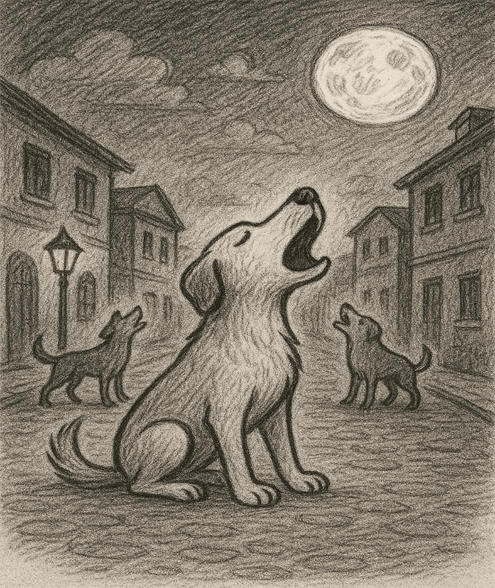
The wonderful stray dogs often choose moments when one is just dozing off, causing their barks and long moans to jolt the person awake in absolute shock. One particular dog takes his place at the junction of three roads in front of my house at exactly midnight and starts howling in all directions. In a frenzy sometimes, I have climbed out of my bed at midnight and tried to scare them away using a toy loudspeaker from across the compound wall. But the dogs are as resistant as the monkeys to such puerile efforts. The kind-hearted municipality responds promptly to complaints. They round up dogs in vans, charge for their services, and rumour again has it that they release them in another colony. Thus, in all probability, these dogs return to our colony, alive, energetic, unsterilised, and barking their lungs off.
However, we often underappreciate the smaller places. My brother has lived in big cities all his life. When he visits us, he is overjoyed to see the stars in the clear night sky, the fresh air we breathe, the hundreds of morning birds chirping freely in the garden, and that any name, place, animal, or thing in the town is within half an hour of travel. He exclaims that his concrete jungles denied him the joy of seeing cow dung, cows, and buffaloes in the middle of a busy road. That cow dung could bring such happiness shakes me.
In the West, honking the car horn is a sign of extreme anger, just one step short of crashing into the opposite vehicle or crushing a person under the wheels. In India, the first lesson is to honk the horn to announce our presence to the world. Nevertheless, there is a certain charm and joy in living amidst the vibrant chaos that, ironically, provides a sense of warm security and belonging. The loud music during festivals, marriages, birthdays, and even funerals bombards us day and night, yet we rarely grumble. Perhaps, like individuals, the value of sounds becomes apparent only when they cease to exist. Or maybe, as our culture often asserts, we intuitively understand that true silence resides within as the world happily swirls around with noise and din.
As Sri Aurobindo writes in The Hour of God, something which Indians perhaps intuitively understand, “There is a silence behind life as well as within it and it is only in this more secret, sustaining silence that we can hear clearly the voice of God.”
 RANDOM MUSINGS